Food safety
Can Dogs Eat Chestnuts?
With caution
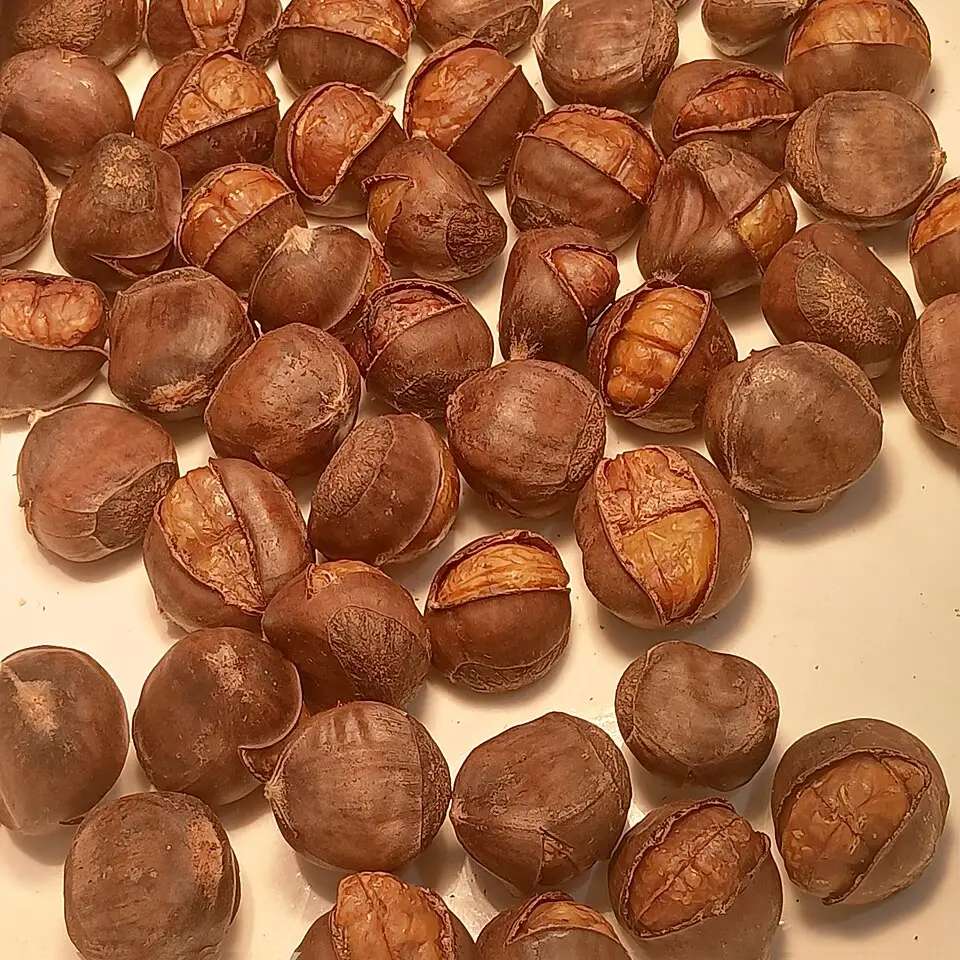
It depends on the chestnut. Sweet chestnuts, the roasting kind, belong to the same genus as the chestnut the ASPCA lists as non-toxic to dogs, and a piece or two, peeled and cooked, is fine. Horse chestnuts (conkers) and buckeyes are toxic to dogs, and any whole nut or shell can choke a dog or block the gut.
What to watch out for
Three very different things share the name. The ASPCA lists the American chestnut (Castanea dentata) as non-toxic to dogs, and the edible chestnuts sold for roasting belong to the same genus, Castanea. The ASPCA lists the horse chestnut, also called buckeye or Ohio buckeye (Aesculus glabra), as toxic to dogs. Pet Poison Helpline stresses that a buckeye's nut is not an edible chestnut. Water chestnuts are something else again.
Horse chestnuts and buckeyes contain aesculin and other saponins, according to the ASPCA, and the signs it lists include severe vomiting and diarrhea, depression or excitement, dilated pupils, weakness, wobbliness, seizures and coma. Pet Poison Helpline says the leaves, bark and nuts all contain toxins, that a whole nut can also cause a bowel obstruction, and that large amounts can cause mild to severe neurological signs.
How to tell them apart
| Sweet chestnut (Castanea) | Horse chestnut or buckeye (Aesculus) | Water chestnut (Eleocharis dulcis) | |
|---|---|---|---|
| What it is | Nut of a tree in the beech family | Seed of a tree in the soapberry family | Edible corm of a grass-like marsh plant; not a nut |
| Husk | Spiny sheath holding several nuts | Green, spiky capsule that usually holds one seed | None; often sold canned |
| Nut | Brown, with a tufted tip | Glossy brown with a whitish scar at the base, 2 to 4 cm (about 1 to 1.5 in) across | Crunchy, slightly sweet flesh |
| Leaves | Single long leaves with bold teeth | Hand-shaped, split into 5 to 7 leaflets | Grass-like stems |
| For dogs | Not toxic (ASPCA); peeled and cooked only | Toxic (ASPCA) | No veterinary guidance found |
The descriptions come from botanical references (the horse chestnut column describes the European horse chestnut), not veterinary ones, so if you are unsure what your dog picked up, treat it as a horse chestnut and call your vet. A photo of the nut and a leaf helps.
Sweet chestnuts are starchy rather than oily. USDA lists roasted European chestnuts at about 2.2 g of fat and 245 kcal per 100 g (3.5 oz), which is low for a nut, but they still add calories.
Benefits
- Peeled, cooked sweet chestnut is a low-fat nut
- The ASPCA lists the chestnut (American chestnut) as non-toxic to dogs
Risks
- Horse chestnuts and buckeyes are toxic and can cause severe vomiting, diarrhea, wobbliness and seizures
- Whole nuts, shells and spiny husks are choking and blockage risks
- Horse chestnuts look superficially similar to sweet chestnuts
- Chestnut stuffing usually contains onion
- Candied chestnuts and chestnut spreads are sweet desserts, not dog treats
What to give instead
If you share sweet chestnuts, roast or boil them, peel off the shell and the papery inner skin, let them cool, and chop the flesh into small pieces. A piece or two is plenty for a treat. Leave out salt, butter and sugar, and do not share chestnut stuffing, which usually contains onion; see stuffing.
On autumn walks, keep your dog away from fallen nuts under horse chestnut and buckeye trees, and teach a solid "leave it". Rake up conkers and buckeyes in your own yard. Water chestnuts are not a nut at all, and we found no veterinary source on them for dogs, so ask your vet before sharing any.
Related forms
| Food | Verdict | Why |
|---|---|---|
| Roasted or boiled sweet chestnuts, peeled | In moderation | Plain, cooled and chopped; a piece or two. |
| Whole chestnuts, shells and husks | No | Choking and blockage risk. |
| Horse chestnuts (conkers) | No | Toxic to dogs, per the ASPCA. |
| Buckeyes | No | Toxic to dogs, per the ASPCA; Pet Poison Helpline adds that a whole nut can cause a bowel obstruction. |
| Water chestnuts | With caution | An aquatic vegetable, not a nut. We found no veterinary guidance on it, so ask your vet before sharing. |
| Chestnut stuffing | No | Usually made with onion; see stuffing. |
If your dog already ate it
A piece of peeled, cooked sweet chestnut needs nothing more than a watchful eye.
If your dog ate a horse chestnut, conker or buckeye, or chewed the leaves or bark, call your vet, an emergency clinic, ASPCA Animal Poison Control at (888) 426-4435 or Pet Poison Helpline at (855) 764-7661 (US; fees may apply). Outside the US, call your local emergency vet. Do not wait for signs, and do not make your dog vomit at home. Bring the nut, a leaf or a photo so the vet can confirm what it was. The ASPCA lists severe vomiting and diarrhea, dilated pupils, weakness, wobbliness, seizures and coma among the possible signs; neither the ASPCA nor Pet Poison Helpline gives a typical onset time.
If your dog swallowed a whole nut of any kind, a shell or a husk, call your vet. Watch for vomiting, not eating, belly pain, lethargy or straining to poop, which VCA lists as signs of a blockage. VCA says time is critical with a stomach or intestinal blockage.
Frequently asked questions
Are horse chestnuts (conkers) poisonous to dogs?
Yes. The ASPCA lists horse chestnut as toxic to dogs because of aesculin and other saponins, with signs that include severe vomiting and diarrhea, weakness, wobbliness and seizures. Call your vet if your dog ate one.
Can dogs eat roasted chestnuts?
The ASPCA lists the American chestnut as non-toxic to dogs, and roasting chestnuts belong to the same genus. A piece or two of plain, peeled, cooked chestnut is fine; skip the shell, salt and butter.
How do I tell a sweet chestnut from a horse chestnut?
Horse chestnuts are glossy brown with a whitish scar at the base, grow one to a spiky capsule, and come from trees with hand-shaped leaves of 5 to 7 leaflets. Sweet chestnuts have a tufted tip, grow several to a spiny husk, and come from trees with long, toothed single leaves.
Can dogs eat water chestnuts?
We found no veterinary or poison-control guidance on water chestnuts for dogs. They are a crunchy aquatic vegetable, not a nut. Ask your vet before sharing any.
Are buckeyes the same as horse chestnuts?
They are close relatives in the same genus, Aesculus. The ASPCA's horse chestnut entry also covers the names buckeye and Ohio buckeye, and lists them as toxic to dogs.
Written from veterinary sources by the Pawsplained editorial team. Not yet reviewed by a veterinarian; this is general information, not a diagnosis or treatment plan. Updated Nov 7, 2026. Editorial policy
Sources
- ASPCA: Toxic and Non-toxic Plants: Horse Chestnut
- ASPCA: Toxic and Non-toxic Plants: Chestnut (American chestnut)
- Pet Poison Helpline: Buckeye
- VCA Animal Hospitals: Ingestion of Foreign Bodies in Dogs
- USDA FoodData Central: Nuts, chestnuts, european, roasted (FDC 170190)
- Wikipedia: Aesculus hippocastanum (horse chestnut)
- Wikipedia: Castanea sativa (sweet chestnut)
- Wikipedia: Eleocharis dulcis (water chestnut)


