Breed comparison
Aussiedoodle vs Bernedoodle
Aussiedoodle or Bernedoodle? Both are Poodle crosses sold in miniature and standard sizes, and both are marketed as fluffy, clever family dogs. The short answer: the Aussiedoodle is the busier, more driven dog, with an Australian Shepherd's energy, while the Bernedoodle is usually calmer and more cuddly but carries the Bernese Mountain Dog's cancer and heat risks. Both are crossbreeds without a written standard, so size, coat and temperament depend on the individual parents, and neither is guaranteed hypoallergenic.
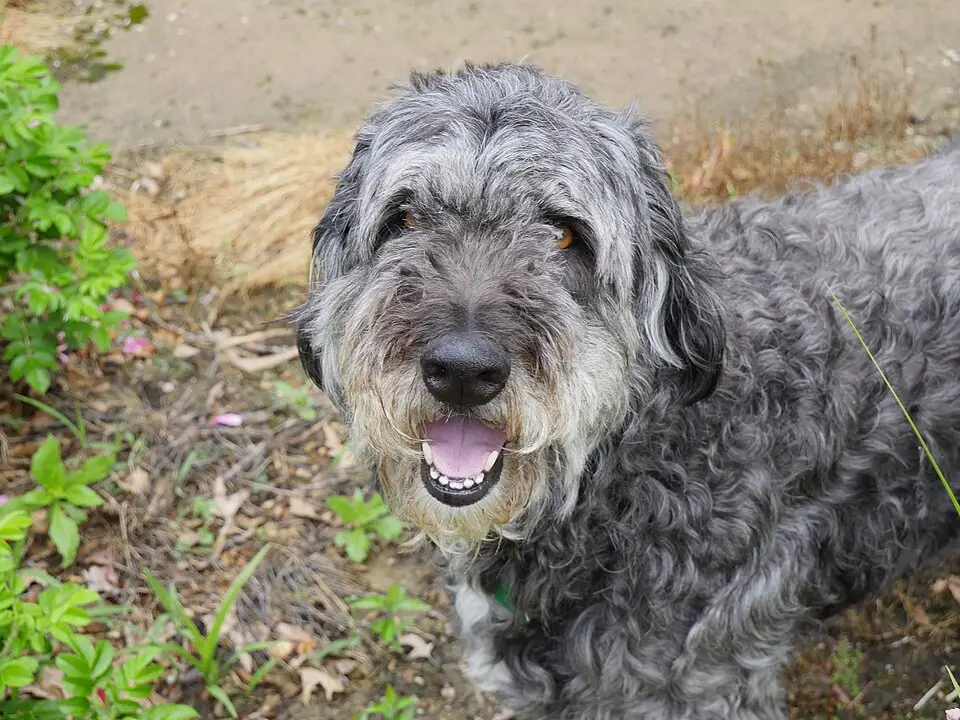
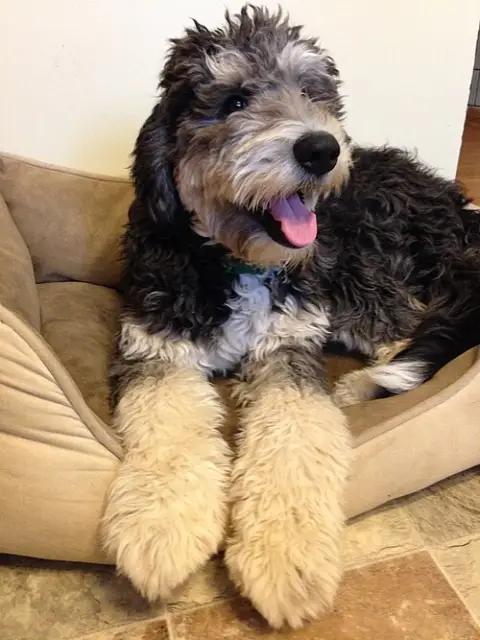
Photo: F. D. Richards from Clinton, MI · CC BY-SA 2.0 · via Wikimedia Commons
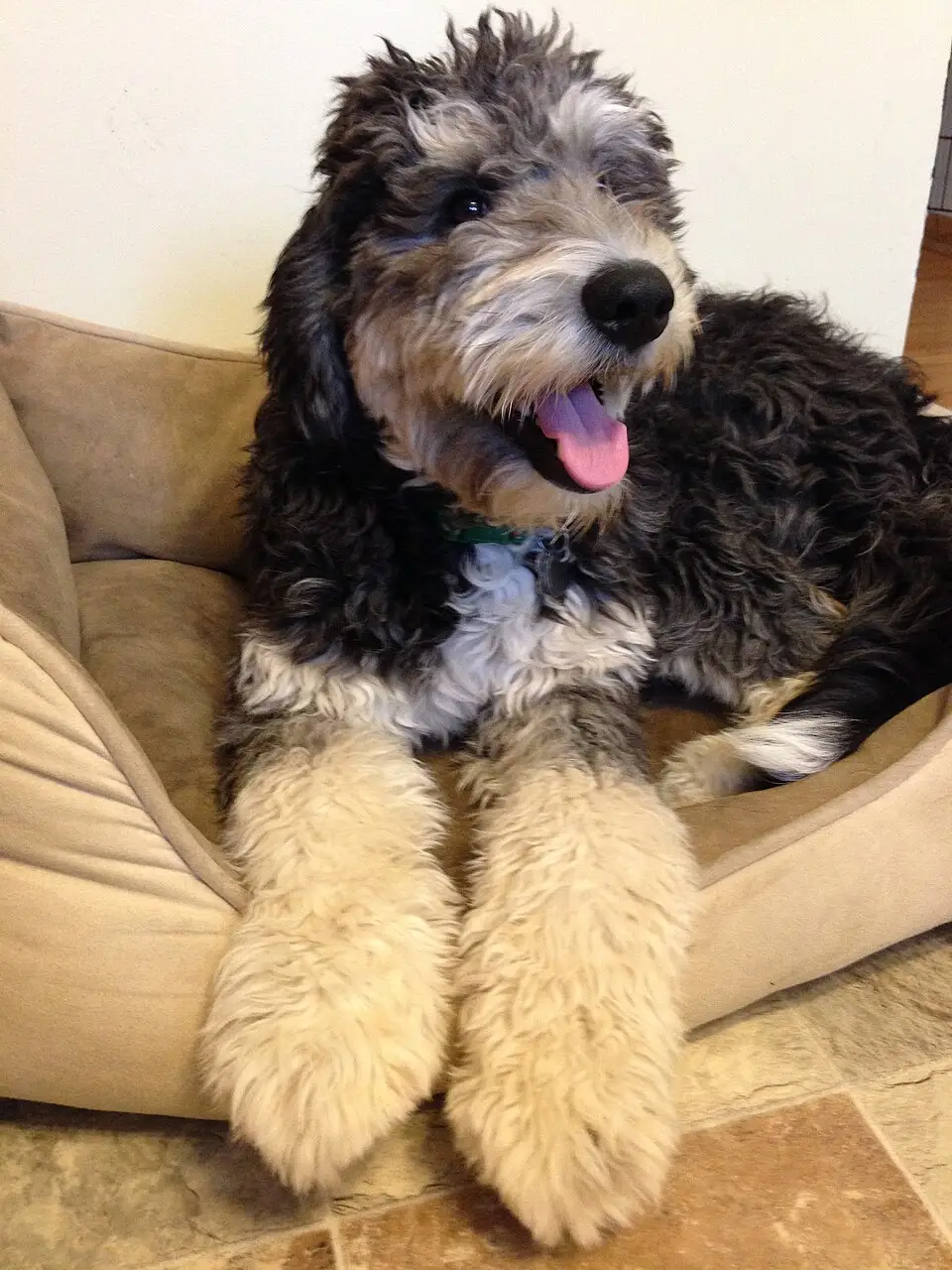
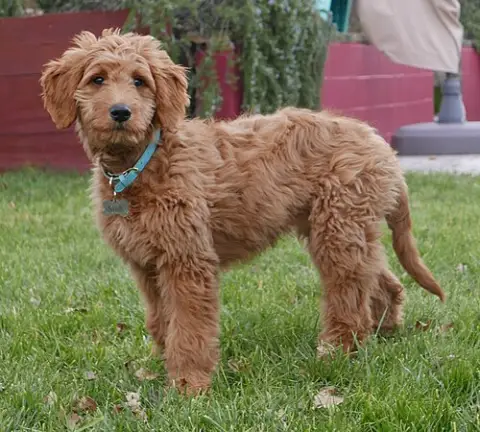
Photo: Jsinghmpls · CC BY-SA 4.0 · via Wikimedia Commons
At a glance
| Aussiedoodle | Bernedoodle | |
|---|---|---|
| Size | Medium | Large |
| Height | 10–23 in (25–58 cm) | 12–29 in (30–74 cm) |
| Weight | 15–70 lb (7–32 kg) | 10–90 lb (5–41 kg) |
| Life span | 10–15 years | 12–15 years |
| Group | Hybrid | Hybrid |
| Coat | Variable: wavy to curly or straighter; shedding ranges from low to moderate | Wavy to curly or straight, variable; low to moderate shedding depending on the puppy |
| Lower-allergen coat | No | No |
| Energy level | ||
| Exercise needs | ||
| Trainability | ||
| Good with kids | ||
| Good with other dogs | ||
| Friendly to strangers | ||
| Apartment living | ||
| Tolerates being alone | ||
| Good for first-time owners | ||
| Shedding | ||
| Grooming needs | ||
| Barking | ||
| Drooling | ||
| General health |
Trait scale 1–5. Shedding, grooming, barking and drooling: 5 = more. Highlighted rows are where the two breeds differ.
The key differences
Size
Size follows the Poodle parent more than the name. PetMD says miniature Aussiedoodles can weigh up to 30 lb (14 kg) and standards up to about 70 lb (32 kg). For Bernedoodles it reports toys under 20 lb (9 kg), miniatures of 20 to 45 lb (9 to 20 kg) and up to 22 in (56 cm), and standards of 61 to 100 lb (28 to 45 kg) and up to 29 in (74 cm). A standard Bernedoodle is the bigger dog, sometimes by a wide margin.
Energy and exercise
This is the biggest difference. The Aussiedoodle scores 4 out of 5 for energy and exercise on our meters, against 3 for the Bernedoodle. PetMD says an Aussiedoodle needs at least an hour of exercise and stimulation every day, and that dogs taking after the Australian Shepherd parent are especially energetic. For the Bernedoodle, PetMD recommends at least two walks a day with brain games such as snuffle mats and puzzle toys. Neither suits a small apartment (2 out of 5 for both), although miniatures cope better.
Coat and grooming
Both score 4 out of 5 for grooming. PetMD says Australian Shepherds are moderate shedders and makes no promise of a light-shedding Aussiedoodle. It says Bernedoodles shed less than many breeds, but that some shed more, especially those resembling the Bernese parent. On our meters the Bernedoodle sheds a little more (3 versus 2) and handles cold better (4 versus 3), while the Aussiedoodle copes better with heat (3 versus 2). Plan on regular brushing and professional grooming for either.
Temperament and training
The Aussiedoodle scores 5 out of 5 for trainability on our meters, and PetMD calls it highly trainable, provided it gets enough mental stimulation to avoid boredom. The Bernedoodle scores 4, and PetMD describes it as loving, goofy, playful and gentle, quick to learn basic cues and not much of a barker. The Bernedoodle edges ahead for affection and kids (5 versus 4), while the Aussiedoodle is friendlier with strangers (4 versus 3). Both score 2 out of 5 for coping with time alone.
Health and life span
PetMD lists thyroid disease, sebaceous adenitis (a skin condition), hip and elbow dysplasia and bloat for the Aussiedoodle, with a life span of 10 to 12 years. Washington State University reports the MDR1 drug-sensitivity mutation in about half of Australian Shepherds and says it is less likely, but possible, in mixed breeds, so ask about testing. For the Bernedoodle, PetMD lists hip and elbow dysplasia, progressive retinal atrophy, allergies and bloat in standards, and 12 to 15 years for standards. The Bernese parent is the bigger worry: in a Swiss study of Bernese Mountain Dogs, cancer caused 58 percent of deaths and median life expectancy was 8.4 years. No study has measured either cross, so treat life spans as estimates. Our health meter scores the Aussiedoodle 3 and the Bernedoodle 2.
Cost and care
Grooming is the main running cost for both. A standard Bernedoodle eats far more than a miniature Aussiedoodle, so check the expected adult size before you budget. Ask any breeder which Poodle size was used, for hip, elbow and eye results on both parents, and for an MDR1 result on the Australian Shepherd parent. Our dog food calculator gives a starting point for meals, and pet insurance is worth pricing early for either cross.
Which one should you choose?
Choose the Aussiedoodle if you are an active household that wants a quick-learning, busy dog for hiking, training games or dog sports, and you can give it at least an hour of exercise and something to think about every day. Choose the Bernedoodle if you want a gentler, more laid-back companion, you live somewhere cool, and you accept more health uncertainty from the Bernese side. Either way, the Poodle parent's size decides how big your dog will get, so ask before you commit. Meet both parents, ask for health test results, and be wary of anyone promising a non-shedding or hypoallergenic puppy.
Aussiedoodle profile Bernedoodle profile
Frequently asked questions
Which is calmer, an Aussiedoodle or a Bernedoodle?
Usually the Bernedoodle. It scores 3 out of 5 for energy on our meters against 4 for the Aussiedoodle, and PetMD says Aussiedoodles need at least an hour of exercise and stimulation a day. Individual dogs vary with their parents.
Which is bigger, an Aussiedoodle or a Bernedoodle?
A standard Bernedoodle, which PetMD reports at 61 to 100 lb (28 to 45 kg). Standard Aussiedoodles reach about 70 lb (32 kg). Miniatures of both are much smaller.
Are Aussiedoodles or Bernedoodles hypoallergenic?
Neither is guaranteed. PetMD says no dog breed is completely hypoallergenic, and coat type varies between puppies. Spend time with the specific dog before you commit.