Safety · 6 min read
My Dog Ate an Oxygen Absorber: What to Do Now
Oxygen absorbers hold iron powder that can poison dogs, especially small ones, while silica gel is far less risky. How to tell them apart and when to call.
In this guide
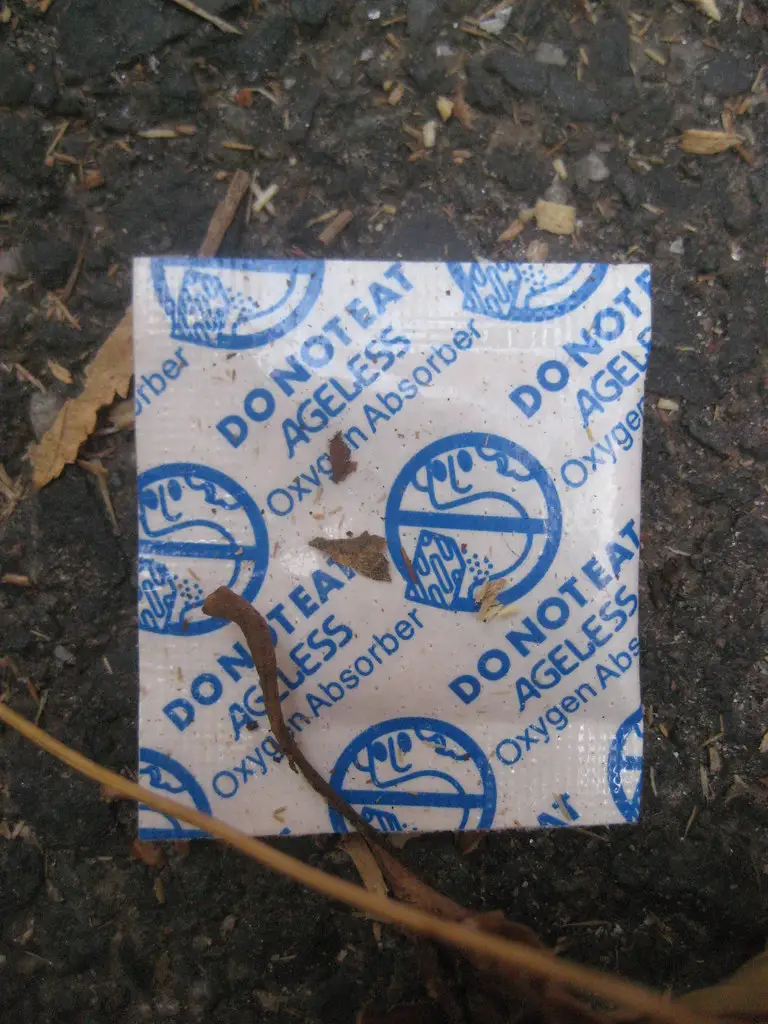
If your dog ate an oxygen absorber, call your vet or an animal poison hotline now, even if your dog seems fine. These small packets usually contain iron powder, and Pet Poison Helpline says the iron in a single packet can cause severe poisoning, with its worst cases seen in dogs under 15 lb (6.8 kg). Do not make your dog vomit or reach for home remedies.
The good news is that many "do not eat" packets are not oxygen absorbers at all. Silica gel, the most common one, is considered virtually non-toxic. Working out which packet your dog found is the first job, and it takes about a minute.
What to do right now
- Take away any packets that are left, along with the bag or box they came from. Keep the packaging, because the vet will want to see it.
- Check your dog. If your dog has collapsed, is vomiting blood or seems very weak, go to the nearest emergency clinic and call on the way.
- Work out what was eaten. Was it a whole packet or just the contents? How many packets, and roughly when? If you have an unopened packet from the same product, bring it.
- Call for advice. Phone your vet or an emergency clinic. In the US you can also call the ASPCA Animal Poison Control Center at (888) 426-4435 or the Pet Poison Helpline at (855) 764-7661 (US; fees may apply). Outside the US, call your local emergency vet.
- Have your dog's weight ready. Size makes a big difference to the risk, and the person on the line will ask.
Oxygen absorber or silica gel? How to tell
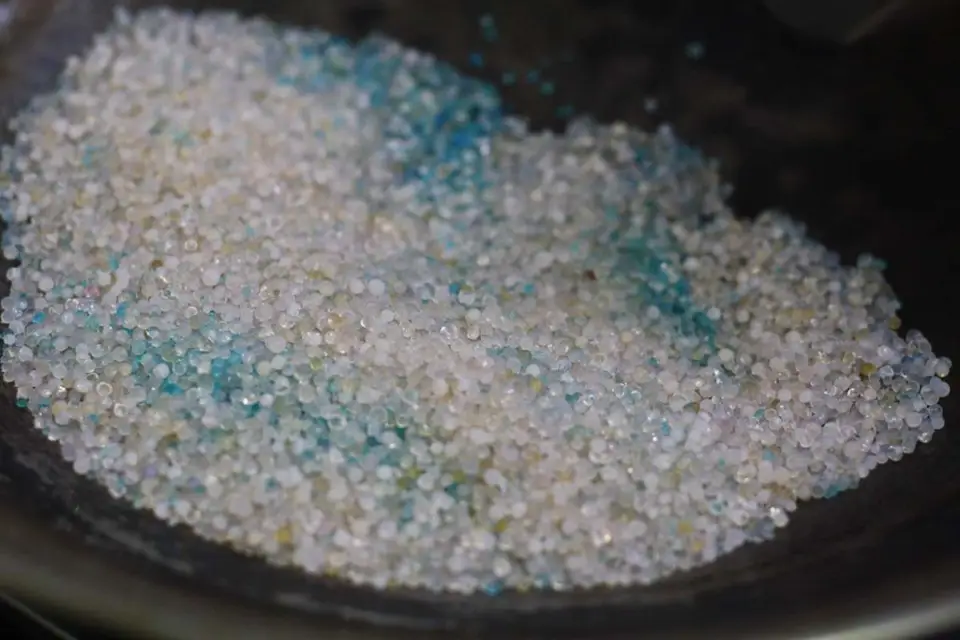
Pet Poison Helpline describes three kinds of freshness packets that dogs commonly eat. Use the packet that is left, or another one from the same product, to check.
| Packet | What's inside | How it looks | Risk to dogs |
|---|---|---|---|
| Oxygen absorber | Iron powder | About 1 x 1 in (2.5 x 2.5 cm); dark brown to rust-colored granules that stick to a magnet | Potentially toxic, even one packet in a small dog |
| Silica gel | Silica beads | About 1 x 2 in (2.5 x 5 cm); white or clear beads, sometimes with colored indicator beads | Virtually non-toxic |
| Activated charcoal | Charcoal | Small white plastic cylinder with black granules that do not stick to a magnet | Virtually non-toxic, but the plastic can block the gut of a small dog |
The magnet test is the quickest check. If the dark granules jump to a fridge magnet, assume iron. Treat it as iron as well if your dog swallowed the packet whole and you have no way to check. A 2012 case report noted that oxygen absorbers rarely say "iron" on the outside, and the packets its authors analyzed were 50 to 70 percent iron, so a missing label proves nothing.
Silica gel beads do not expand in the stomach, and the soft packet is unlikely to cause an injury or a blockage. Pet Poison Helpline notes that the indicator dye in some silica gel may be toxic in large doses, so call if your dog ate a lot of it or several packets.
Why iron is the problem
Iron is an essential mineral, but too much of it is poisonous. The Merck Veterinary Manual explains that iron irritates the lining of the stomach and intestines and, in severe cases, can burn it. Once the blood's capacity to carry iron is used up, the excess free iron damages the liver.
Oxygen absorbers soak up oxygen inside sealed food bags, which is why they turn up in jerky, pepperoni, dried fruit and dog treats. In the 2012 case report, a 7-month-old Jack Russell Terrier ate one or two absorbers from a bag of dog treats. Eight to 12 hours later she was vomiting and passing dark, tarry stool, and she needed an iron antidote plus supportive care. Her signs resolved, but one of her liver values was still raised at a check three months later.
What to watch for
Iron poisoning tends to happen in stages, so a dog that looks normal at first is not necessarily safe.
- The first few hours. Merck says signs usually begin within 6 hours. Vomiting, sometimes with blood, is one of the first, along with diarrhea that may also be bloody. Pet Poison Helpline adds loss of appetite, lethargy, belly pain, panting and tremors.
- An apparent recovery. Some dogs seem to improve for a while.
- Later, serious problems. Shock, dullness, fever, acid buildup in the blood and liver damage can follow. Merck places these about 12 to 24 hours after the first signs, often after the dog seemed to recover, and Pet Poison Helpline describes them developing 1 to 5 days after exposure.
Pet Poison Helpline says a dog that does not vomit probably did not eat a toxic dose. That is a judgment for the poison line or your vet to make with you, not a reason to skip the call.
What the vet may do
Expect questions about the packet, your dog's weight and the timing. An X-ray can show a swallowed packet as a metal-dense object in the stomach, and a blood iron level taken 4 to 6 hours after ingestion helps confirm how much was absorbed.
Depending on the amount and your dog's size, the team may empty the stomach, give medicines that bind iron in the gut and protect its lining, and provide fluids and anti-nausea treatment. Activated charcoal does not bind iron well, so it is not the usual answer here. If blood iron is high, the vet may use an antidote called deferoxamine, which Merck says works best within 24 hours of ingestion. Some dogs stay in hospital for monitoring and repeat blood tests.
What not to do
- Do not make your dog vomit at home. That decision belongs to a vet or poison specialist.
- Do not give charcoal, antacids, milk or any home remedy unless the vet or poison line tells you to.
- Do not wait for signs. Treatment works best early, and the most serious effects can be delayed.
- Do not trust the label. Many absorbers do not mention iron on the outside.
Where these packets hide
Check the bag every time you open jerky treats, dried meat snacks, dried fruit or similar foods, and put any packet straight into a lidded trash can. Do not leave open treat bags on low tables or in bags on the floor. Pet Poison Helpline also lists chemical hand warmers and vitamin and mineral supplements as common sources of iron overdose, so keep those out of reach too. Our guide to toxic household items for dogs helps you lock up the rest, and winter hazards for dogs covers other cold-season risks.
When to call your vet
Call straight away if your dog ate an oxygen absorber or any packet you cannot identify, even if your dog seems fine. Go to an emergency clinic now if your dog:
- Vomits repeatedly, or vomits blood
- Has bloody, black or tarry stool
- Is weak, wobbly, trembling or collapses
- Seems to recover and then gets sick again
For general steps in any poisoning, see what to do if your dog eats something toxic. Keep the ASPCA Animal Poison Control Center, (888) 426-4435, and the Pet Poison Helpline, (855) 764-7661, saved in your phone (US; fees may apply). Outside the US, call your local emergency vet.
Frequently asked questions
Is one oxygen absorber packet dangerous for a dog?
It can be. Pet Poison Helpline says the iron in a single packet can cause severe poisoning, and its most severe cases have been in dogs under 15 lb (6.8 kg). Large dogs are less likely to be poisoned unless they ate several packets or unusually large ones, but only your vet or a poison line can judge your dog's risk, so call.
Is silica gel toxic to dogs?
Pet Poison Helpline calls silica gel virtually non-toxic. The beads do not expand in the stomach and the soft packet is unlikely to cause a blockage. The colored indicator dye in some packets may be toxic in large amounts, so call if your dog ate a lot.
My dog seems fine. Can I wait and see?
No. The Merck Veterinary Manual says iron poisoning can seem to settle before shock and liver failure appear, often 12 to 24 hours later. Call your vet or a poison hotline as soon as you know your dog ate an oxygen absorber.
Should I make my dog vomit?
Not on your own. Whether to empty the stomach is a decision for your vet or a poison specialist, who will weigh your dog's size, the number of packets and the timing. Do not give charcoal or other home remedies either. Merck notes that activated charcoal does not bind iron well.
Sources
- Pet Poison Helpline: Are those packaging freshness packets really toxic to dogs?
- Pet Poison Helpline: Iron
- Pet Poison Helpline: Signs of Iron Overdose in Pets
- Merck Veterinary Manual: Toxicoses in Animals From Human Multivitamins and Supplements (iron)
- Brutlag, Flint and Puschner (2012): Iron intoxication in a dog consequent to the ingestion of oxygen absorber sachets in pet treat packaging, Journal of Medical Toxicology
More safety guides
All guides
Safety
Christmas Hazards for Dogs: What to Watch For
Tinsel, tree water, poinsettias, chocolate and party guests are the big Christmas risks for dogs. Here is how to spot e…
Safety
Common Household Items That Are Toxic to Dogs
Human medicines, chocolate, xylitol, cleaners, rodent bait, batteries and essential oils are common household dog poiso…
Safety
Dog First Aid Basics Every Owner Should Know
Dog first aid buys time until a vet takes over. Learn how to stay safe, stop bleeding, respond to choking and heatstrok…