Senior dogs · 7 min read
Senior Dog Care: How to Help Your Older Dog Thrive
Quick answer
A dog is a senior in the last 25% of their expected lifespan, which is roughly 6 to 7 years for giant breeds and 8 to 11 for small ones. Take your senior to the vet at least twice a year, weigh them regularly, watch for changes, and make your home easier on aging joints.
Key takeaways
- AAHA defines a senior dog as one in the last 25% of their estimated lifespan, so the starting age depends on size.
- Senior dogs should see the vet at least twice a year, with an oral exam at every visit according to AAHA.
- Weigh your dog on the same scale at least every two months, because weight change can be an early sign of disease.
- Orthopedic beds, ramps, traction on slick floors, water bowls on every floor and short nails make life easier for stiff dogs.
- Ask your vet before raising your dog's food bowl, since Cornell lists raised bowls as a possible risk factor for bloat.
In this guide
- When is a dog a senior?
- How often should a senior dog see the vet?
- What changes should you watch for?
- How should you manage food, weight and water?
- How much exercise does a senior dog need?
- How do you make your home senior-friendly?
- How can you keep an older dog's mind busy?
- Why does dental care matter for older dogs?
- When to call your vet
- FAQ
A dog counts as a senior in the last quarter of their expected lifespan, and good senior care comes down to regular vet visits, a close eye on changes and a home that is easy on aging joints. Catching problems early gives your dog the best chance of comfortable older years.
When is a dog a senior?
AAHA says a senior dog is in the last 25% of their estimated lifespan, and that no single age defines it. VCA puts the start at about 75% of average lifespan, with giant breeds at about 5 to 6 years and small breeds at 10 to 12. The AVMA offers a rough guide by size:
| Size | Weight | Senior age (AVMA estimate) |
|---|---|---|
| Small or toy | Under 20 lb (9 kg) | 8 to 11 years |
| Medium | 20 to 50 lb (9 to 23 kg) | 8 to 10 years |
| Large | 50 to 90 lb (23 to 41 kg) | 8 to 9 years |
| Giant | Over 90 lb (41 kg) | 6 to 7 years |
Sources differ a little, so treat the table as a guide, not a deadline. Try our dog age calculator or the lifespan chart to see where your breed sits.
How often should a senior dog see the vet?
At least twice a year, according to the AVMA and VCA. AAHA advises a once- or twice-yearly diagnostic workup, with an oral exam at every visit. These checks matter because the AVMA says cancer causes death in almost half of dogs over 10, and early detection widens the options.
The AVMA lists the common age-related problems as heart disease, kidney or urinary disease, liver disease, diabetes, arthritis, obesity, and vision or hearing loss. Our pages on arthritis and kidney disease explain two of the most common.
What changes should you watch for?
Report changes early rather than waiting for the next checkup. VCA lists these as worth a prompt call:
- A sustained increase in drinking or urination
- Weight loss or an appetite change
- Repeated vomiting, or diarrhea lasting over 3 days
- Limping for more than 1 to 2 days
- Vision loss, lumps or sores, or foul breath
- Coughing, labored breathing, collapse or seizures
- More sleep or less activity than usual
Cognitive dysfunction, the canine form of dementia, shows up differently. The AVMA lists confusion, disorientation, sleep changes, house soiling, wandering, repetitive actions, more anxiety or noise sensitivity, less play and a weaker response to cues. AAHA says early treatment works better, so mention these signs to your vet even if they seem minor.
How should you manage food, weight and water?
Weigh your dog on the same scale at least every two months, VCA advises, since weight change can signal disease. Keeping a lean body condition also reduces stress on arthritic joints (VCA). Our body condition score tool helps you judge at home.
Keep a water bowl on every floor of your home (VCA). A sustained rise in thirst is worth a vet visit.
What about raised bowls? The AVMA lists raised feeding platforms among home aids, and VCA suggests bowls between elbow and shoulder height for arthritic dogs' comfort. But Cornell lists raised food bowls as a possible risk factor for bloat and advises avoiding them. Ask your vet before raising your dog's bowl, especially for a large or deep-chested breed. Our bloat page explains the risk.
How much exercise does a senior dog need?
Older dogs still need to move, but in gentler ways. Suitable exercise helps older pets stay mobile and healthy, the AVMA says. For a stiff, arthritic dog that is not on a regular exercise routine, VCA advises frequent but short walks, starting with about 10 minutes of walking three times a day and building up week by week if stiffness does not get worse. Ask your vet how far and how long your dog should walk, and which surfaces suit them (VCA). Our exercise guide covers how needs change with age.
VCA says cold and damp worsen stiffness in arthritic dogs, so keep them warm and dry. If your dog is sore after activity, or limps for more than a day or two, tell your vet. Never give your dog human pain relievers unless your vet tells you to. The Merck Veterinary Manual says human over-the-counter drugs should not be used in pets unless directed by your veterinarian, and notes that naproxen has caused bleeding into the bowels in dogs.
How do you make your home senior-friendly?
Small changes make a big difference to a stiff or unsteady dog:
- An orthopedic bed and a quiet resting spot (AVMA)
- Pet stairs or ramps for the sofa, bed or car
- Non-skid rugs or yoga mats on slick floors (VCA), or flooring with good traction (AAHA)
- Gates on stairs, and short nails for better grip
- The same furniture layout if your dog's vision is failing (AVMA)
Outdoor ramps help with steps, too (AAHA).
How can you keep an older dog's mind busy?
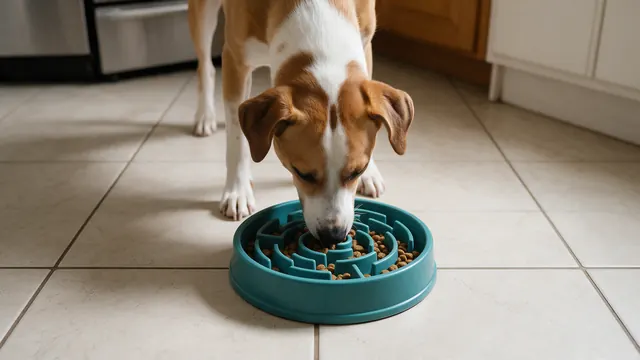
Mental work matters at any age. AAHA lists environmental enrichment as part of managing cognitive changes, and VCA says food puzzles support cognitive health in senior pets. Offer puzzle feeders, short training games or sniffy walks where your dog sets the pace.
Why does dental care matter for older dogs?
Periodontal disease is common in seniors, and VCA says chronic inflammation can affect organs. Options include brushing, water additives and professional cleaning under anesthesia, as your vet advises. Our dental disease page lists the warning signs, and your vet will check teeth at every senior visit.
When to call your vet
Call your vet about any sudden change in appetite, thirst, weight, breathing or behavior. Collapse, labored breathing, seizures or a swollen belly need urgent attention. Older dogs can go downhill quickly, so a phone call is better than waiting.
Frequently asked questions
At what age is a dog considered a senior?
AAHA says a senior dog is in the last 25% of their estimated lifespan, so no single age applies. The AVMA estimates 8 to 11 years for small dogs, 8 to 10 for medium, 8 to 9 for large and 6 to 7 for giant breeds.
How often should a senior dog see the vet?
At least twice a year, according to the AVMA and VCA. AAHA advises a once- or twice-yearly diagnostic workup, with an oral exam at every visit.
Is it normal for an old dog to sleep more?
Somewhat more rest is common, but VCA lists more sleep or less activity than usual among the changes to report. Tell your vet if the change is sudden or comes with other signs.
What are signs of dementia in dogs?
The AVMA lists confusion, disorientation, sleep changes, house soiling, wandering, repetitive actions, more anxiety or noise sensitivity, less play and a weaker response to cues. AAHA says early treatment works better, so see your vet early.
Should senior dogs eat from raised bowls?
Ask your vet first. Some vets suggest bowls between elbow and shoulder height for arthritic dogs' comfort, but Cornell lists raised food bowls as a risk factor for bloat and advises avoiding them. This matters most for large or deep-chested breeds.
Sources
- AVMA: Senior Pets
- VCA: Senior Dog Care, Special Considerations
- AAHA: Senior Care Guidelines Summary (2023)
- VCA: Helping Your Dog With Osteoarthritis
- VCA: Exercising Dogs With Osteoarthritis
- Cornell University College of Veterinary Medicine: Gastric Dilatation Volvulus (GDV) or Bloat
- Merck Veterinary Manual: Poisoning From Human Over-the-Counter Drugs