Plant safety
Is Christmas Cactus Toxic to Dogs?
Schlumbergera × buckleyi · Cactaceae
Also called Holiday cactus, Easter cactus
Non-Toxic to dogs
No. ASPCA lists Christmas cactus as non-toxic to dogs. Other plants sold at the holidays, such as kalanchoe and poinsettia, are on its toxic list.
Why it’s considered safe for dogs
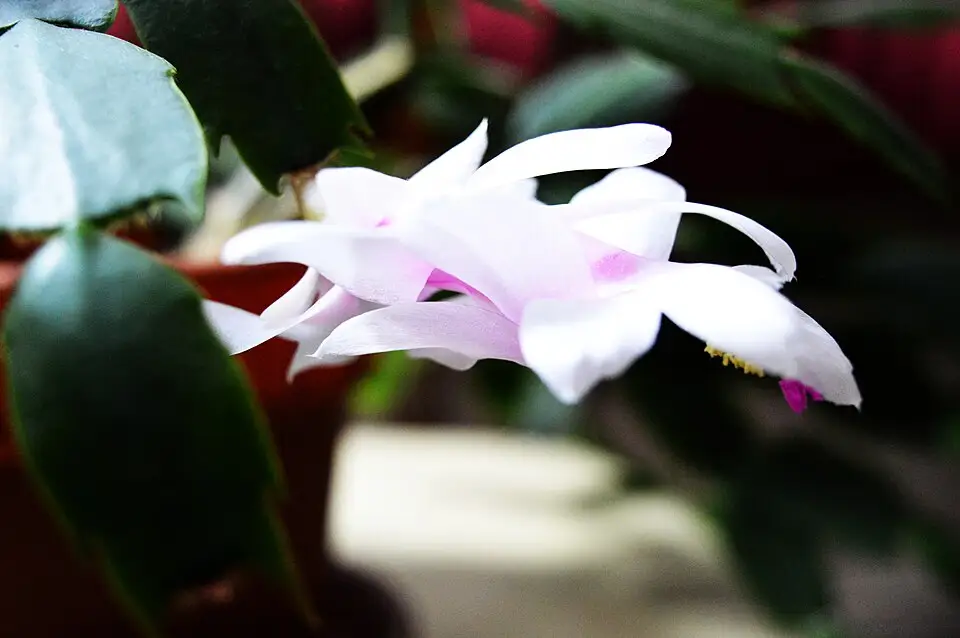
Christmas cactus is a trailing, segmented houseplant that blooms around the holidays. The ASPCA lists it as non-toxic to dogs under the older name Schlumbergera bridgesii, with Easter cactus as another name on the same entry. NC State Extension also tags it as non-toxic for dogs.
Safe does not mean edible. The ASPCA notes that eating any plant material can cause vomiting and stomach upset in dogs. The jointed stems break off easily, so a dog that knocks the plant over can end up with pieces to chew.
The hazard is the plant next to it. December displays often mix Christmas cactus with kalanchoe and poinsettia, and both are on the ASPCA's toxic list for dogs. A tag with the plant name saves guesswork.
Christmas, Thanksgiving or Easter cactus?
Three holiday cacti are sold under similar names. NC State Extension says most plants sold as Christmas cactus today are the hybrid Schlumbergera × buckleyi, a cross between two species. You can tell the three apart by their stem segments and bloom time:
| Christmas cactus | Thanksgiving cactus | Easter cactus | |
|---|---|---|---|
| Botanical name | Schlumbergera × buckleyi | Schlumbergera truncata | Rhipsalidopsis gaertneri (also sold as Hatiora gaertneri) |
| Stem segments | Flat, with rounded notches along the edges | Flat, with pointed, claw-like teeth along the edges | Flat and rounded, edged with tiny soft bristles |
| Flowers | Drooping, tubular, magenta to pink; December to February | Mostly November or December, sometimes again in February | Star-shaped, around Easter |
| ASPCA | Non-toxic (listed as S. bridgesii) | No separate entry | Named on the Christmas cactus entry: non-toxic |
| NC State Extension | Non-toxic for dogs | Non-toxic for dogs | Non-toxic for dogs |
So all three are considered safe for dogs. The Thanksgiving cactus has no ASPCA entry of its own, which is why we also checked NC State's listing.
If your dog ate christmas cactus
A chewed stem or flower usually means little more than a mild upset stomach. ASPCA lists Christmas cactus as non-toxic, so watch for vomiting or diarrhea.
Call your vet if the signs persist or your dog ate a lot. Call right away if your dog may have eaten a kalanchoe or other holiday plant, or if the plant was treated with fertilizer or a pesticide. In the US, ASPCA Animal Poison Control is at (888) 426-4435 and Pet Poison Helpline at (855) 764-7661 (fees may apply); elsewhere, call your local emergency vet.
Do not make your dog vomit at home. Bring the plant tag with you to the vet.
If your dog ate the soil or plant food
A non-toxic plant does not make the products in its pot safe. If your dog ate potting mix with fertilizer in it, plant food sticks or granules, call your vet or a poison line with the product label in hand.
Keeping your dog safe
Keep a Christmas cactus on a shelf, plant stand or hanging planter, since trailing stems at floor level are easy to grab. Check the pot for a tag before you put it near a mixed holiday display.
Store plant food and sprays out of reach, and avoid treating any plant your dog can get to.
For holiday color without the worry, pair it with other plants ASPCA lists as non-toxic, such as African violets and orchids, and put poinsettia and kalanchoe well out of reach.
Holiday plants at a glance
| Plant | ASPCA status for dogs |
|---|---|
| Christmas cactus | Non-toxic |
| Norfolk Island pine | Non-toxic (listed as Australian pine) |
| Poinsettia | Toxic |
| Holly | Toxic |
| Mistletoe (American) | Toxic |
| Amaryllis | Toxic |
| Paperwhites | Toxic |
| Kalanchoe | Toxic |
| Cyclamen | Toxic |
Each plant's page lists the signs to watch for.
Frequently asked questions
Is Christmas cactus toxic to dogs?
No. ASPCA lists it as non-toxic to dogs, though it notes that eating any plant can cause vomiting or an upset stomach.
Is poinsettia as safe as Christmas cactus?
No. Poinsettia is on the ASPCA's toxic list for dogs, so keep it out of reach.
Is kalanchoe safe around dogs?
No. Kalanchoe is on the ASPCA's toxic list for dogs. Keep it out of reach.
Does Easter cactus have the same classification?
ASPCA lists Easter cactus as another name on its Christmas cactus entry, which is non-toxic, and NC State Extension tags Easter cactus as non-toxic for dogs. If you are unsure of the exact plant, check the Latin name or ask your vet.
How can I tell a Christmas cactus from a Thanksgiving cactus?
Look at the stem edges. NC State Extension describes rounded notches on Christmas cactus and pointed, claw-like teeth on Thanksgiving cactus. Both are listed as non-toxic for dogs.
Written from veterinary sources by the Pawsplained editorial team. Not yet reviewed by a veterinarian; this is general information, not a diagnosis or treatment plan. Updated Nov 7, 2026. Editorial policy
Sources
- ASPCA: Toxic and Non-Toxic Plant List — Dogs
- ASPCA: Toxic and Non-Toxic Plants List
- NC State Extension Plant Toolbox: Schlumbergera x buckleyi (Christmas cactus)
- NC State Extension Plant Toolbox: Schlumbergera truncata (Thanksgiving cactus)
- NC State Extension Plant Toolbox: Rhipsalidopsis gaertneri (Easter cactus)