Plant safety
Is String Of Pearls Toxic to Dogs?
Curio rowleyanus (formerly Senecio rowleyanus) · Asteraceae
Also called String of beads, Bead plant, Necklace plant, String of peas
Toxic to dogs
Severity: Mild
Yes, mildly. The ASPCA doesn't list string of pearls, but NC State Extension rates it as a low-severity poisonous plant that can cause vomiting and diarrhea. Its look-alikes vary: string of bananas is a problem too, while string of turtles is non-toxic.
- Toxic parts
- Leaves (the "pearls"), Sap
- Toxic compounds
- Pyrrolizidine alkaloids (per NC State Extension)
- Where you’ll find it
- Houseplant
Signs of poisoning
- Vomiting
- Diarrhea
- Skin irritation or rash from the sap
Why it’s harmful to dogs
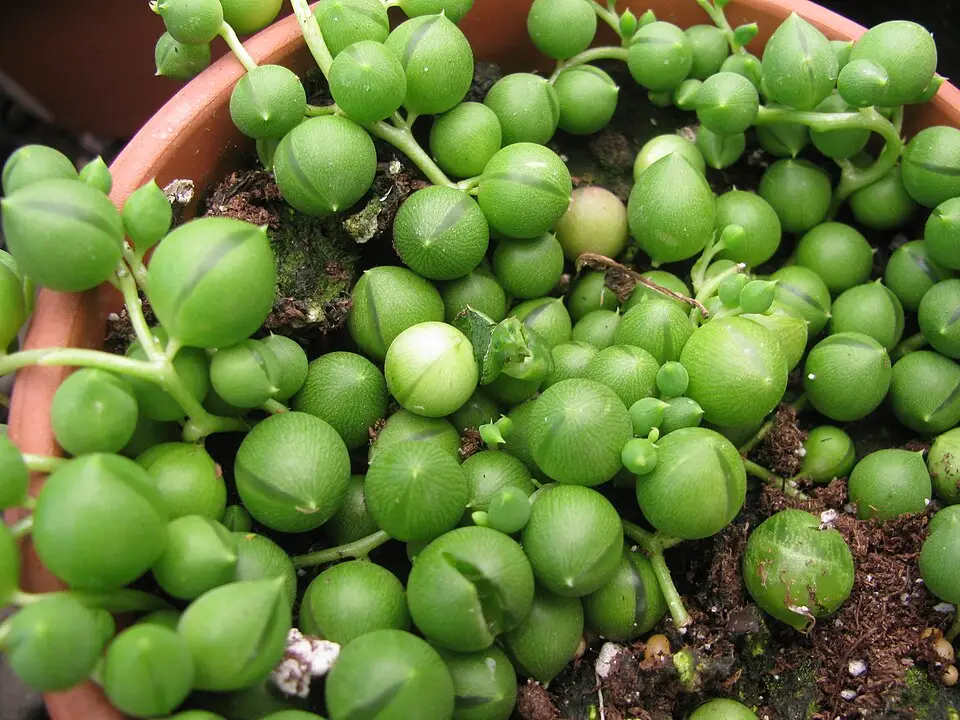
String of pearls is the trailing succulent with tiny, round, pea-like leaves strung along thin stems, usually spilling out of a hanging basket. Botanists recently moved it from Senecio to Curio, so tags may say Senecio rowleyanus or Curio rowleyanus. NC State Extension also lists common names such as string of beads, necklace plant and rosary vine.
The ASPCA's dog plant list has no entry for it, so the rating here comes from NC State Extension. It rates string of pearls as poisonous with low severity: eating the leaves can cause vomiting and diarrhea, and the sap can irritate skin. It names pyrrolizidine alkaloids as the toxic principle.
NC State names the same group of alkaloids for the closely related string of bananas, and warns that large amounts of that plant can cause irreversible liver disease. We found no report of liver damage in dogs from string of pearls, but it's a good reason not to let your dog make a habit of grazing on it.
The "string of" family, one by one
These trailing plants share a nickname, not a toxicity rating. Check each one separately:
| Plant | Botanical name | Dog status | Source |
|---|---|---|---|
| String of pearls | Curio rowleyanus | Toxic, low severity: vomiting, diarrhea, skin irritation | NC State Extension (not listed by ASPCA) |
| String of bananas | Curio radicans | Toxic: loss of appetite, nausea, vomiting; large amounts may cause liver disease | NC State Extension (not listed by ASPCA) |
| String of hearts | Ceropegia woodii | Not listed by ASPCA; no reliable rating found | None found |
| String of turtles | Peperomia prostrata | Non-toxic | ASPCA (as trailing peperomia), NC State Extension |
String of hearts is the one to be careful with. Neither the ASPCA list nor NC State's plant entry gives it a toxicity rating, so we won't call it safe. NC State also notes that string of hearts is often called rosary vine, the same nickname used for string of pearls, so the botanical name on the tag is the only reliable guide.
If your dog ate string of pearls
A few pearls usually mean a mild stomach upset at most. Clear any pieces from your dog's mouth and watch for vomiting and diarrhea. NC State notes the sap can cause a skin rash, so call your vet if any redness doesn't settle.
Call your vet if the signs last, your dog ate a lot, or your dog keeps going back to the plant. Mention that it contains pyrrolizidine alkaloids, which helps your vet judge any liver risk. In the US, ASPCA Animal Poison Control is at (888) 426-4435 and Pet Poison Helpline at (855) 764-7661 (fees may apply); elsewhere, call your local emergency vet. Don't make your dog vomit at home.
If you aren't sure which "string of" plant it was, take a photo of the plant and its tag to the call.
Keeping your dog safe
Hang string of pearls high and trim the strands so none dangle within reach; trailing stems are the easiest part to grab. Pick up fallen pieces and cuttings, including any you're rooting on a windowsill.
If you love the trailing look, peperomia is a good swap: the ASPCA lists trailing peperomia, the plant sold as string of turtles, as non-toxic. Hoya is another trailing plant the ASPCA lists as non-toxic.
Dog-safe alternatives
Frequently asked questions
Is string of pearls toxic to dogs?
It's mildly toxic. The ASPCA doesn't list it, but NC State Extension rates it as a low-severity poisonous plant that can cause vomiting and diarrhea, with sap that can irritate skin.
Is string of turtles safe for dogs?
Yes. The ASPCA lists trailing peperomia (Peperomia prostrata), the plant sold as string of turtles, as non-toxic to dogs, and NC State Extension also tags it as non-toxic for dogs.
Is string of hearts toxic to dogs?
We don't know. It isn't in the ASPCA database and we found no other reliable rating, so keep it out of reach and call your vet if your dog eats some.
Is string of bananas the same as string of pearls?
No, but they're close relatives in the genus Curio, and NC State Extension rates both as poisonous. It says large amounts of string of bananas can cause liver disease.
Why does my plant tag say Senecio?
That's the older name. NC State Extension lists Senecio rowleyanus as a previous name for Curio rowleyanus, string of pearls.
Written from veterinary sources by the Pawsplained editorial team. Not yet reviewed by a veterinarian; this is general information, not a diagnosis or treatment plan. Updated Nov 7, 2026. Editorial policy
Sources
- NC State Extension Plant Toolbox: Curio rowleyanus (string of pearls)
- NC State Extension Plant Toolbox: Curio radicans (string of bananas)
- NC State Extension Plant Toolbox: Ceropegia woodii (string of hearts)
- NC State Extension Plant Toolbox: Peperomia prostrata (string of turtles)
- ASPCA: Toxic and Non-Toxic Plant List — Dogs