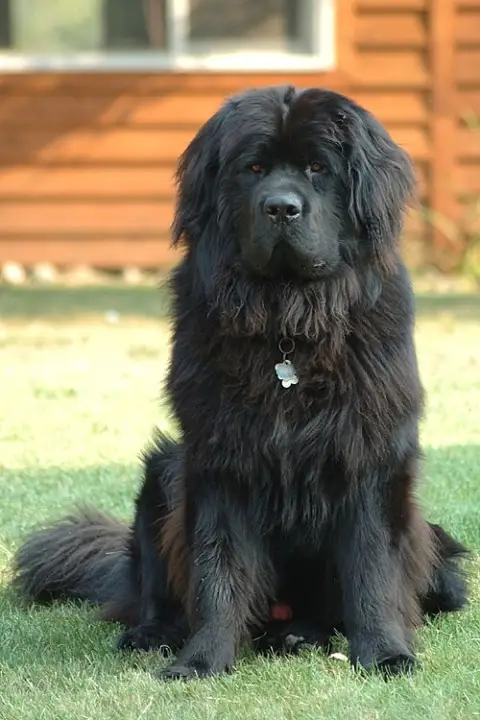
Hybrid · Hybrid group
Golden Mountain Dog
Also called Golden Retriever Bernese Mountain Dog mix, Bernese Golden Retriever mix
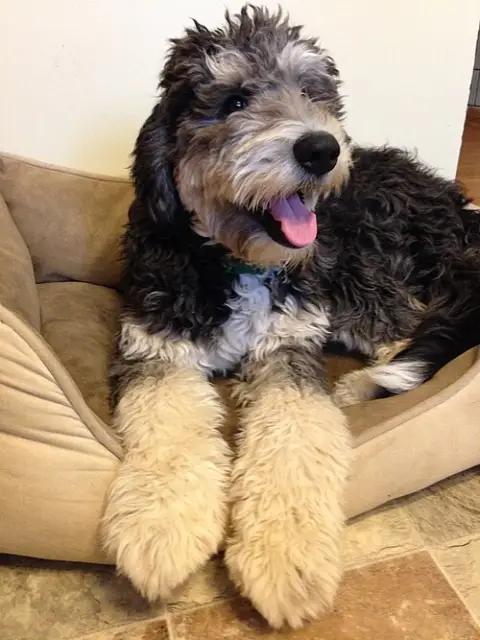
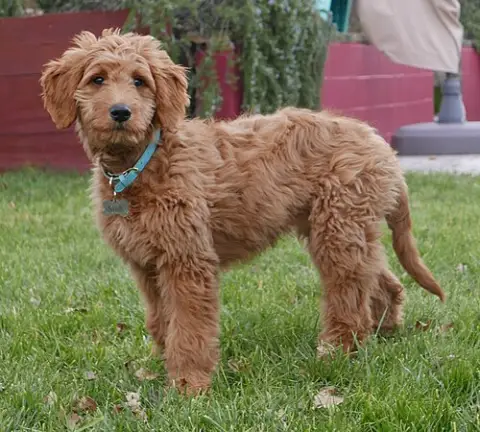
The Golden Mountain Dog is a cross between a Golden Retriever and a Bernese Mountain Dog. It has no breed standard, so size, coat and temperament vary, but going by the parents' typical sizes most adults should fall somewhere between about 21 and 27.5 in (53 to 70 cm) and 55 to 115 lb (25 to 52 kg). Expect a big, friendly, heavy-shedding dog, and plan for the cancer and joint risks found in both parent breeds.
- Height
- 21–27.5 in (53–70 cm)
- Weight
- 55–115 lb (25–52 kg)
- Life span
- 7–12 years
- Size
- Large
- Group
- Hybrid
- Origin
- Designer cross (origin date unknown)
- Coat
- Variable: thick double coat from two heavy-shedding parents
Colors: Varies by litter: no color standard
Parent breeds: Golden Retriever Bernese Mountain Dog
Great for
- Families who want a big, people-focused dog
- Cool-climate homes with room to move
- Owners happy to brush and vacuum often
- Buyers willing to check both parents' health tests
Think twice if
- Hot climates without air conditioning
- People who dislike dog hair
- Homes where the dog would be alone all day
- Anyone wanting a predictable size or a long-lived dog
Traits at a glance
1–5 scale. For grooming, shedding, drooling and barking, 5 means more. For the “living with” rows, 5 means copes well.
Living with
- Apartment living
- Good for first-time owners
- Tolerates being alone
- Handles cold
- Handles heat
Personality
- Affection with family
- Good with kids
- Good with other dogs
- Friendly to strangers
- Playfulness
- Watchdog instinct
Care
- Grooming needs
- Shedding
- Drooling
- Barking
- General health
Energy & training
- Energy level
- Exercise needs
- Trainability
- Prey drive
Personality
There is no breed standard for the Golden Mountain Dog, so the honest description is a blend of its parents. PetMD describes Golden Retrievers as intelligent, loyal, easy to train and very affectionate, and says they are great with young children and other pets when socialized. It describes Bernese Mountain Dogs as affectionate and patient with people and other pets, often calm but easily enticed to play.
Most owners can expect an affectionate, gentle family dog, but individual puppies vary. One may be as outgoing as a typical Golden, while a littermate may be more reserved with strangers, which PetMD says is common in Bernese. PetMD also notes that many Bernese dislike being left alone and can develop separation anxiety, and that unsupervised Golden puppies tend to eat things they shouldn't.
Socialize your puppy early, supervise play with small children because of the dog's size, and meet both parents if you can. Their temperaments are the best preview you will get.
History
The Golden Mountain Dog is a modern crossbreed. We found no documented founder, breed club or written standard for it, so treat any detailed origin story from a seller with caution. What can be described with confidence is its parents.
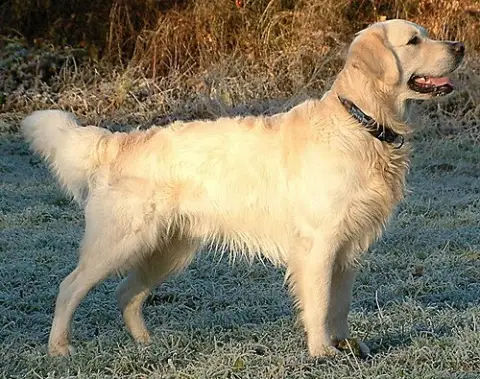
The Golden Retriever was originally bred to hunt, PetMD says, and today Goldens are also trained as therapy dogs, guide dogs and search-and-rescue dogs. They are one of the most popular dog breeds in the United States, largely as family companions.
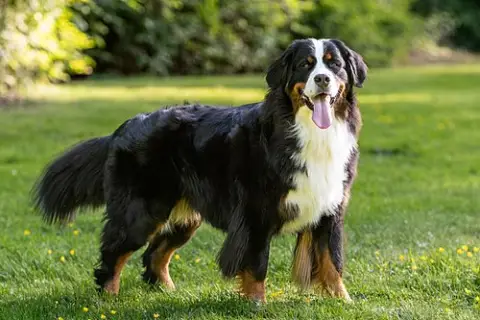
The Bernese Mountain Dog originated in Switzerland, where it was used as a farm dog. PetMD says Bernese were imported to the United States to work on farms in the 1920s, but today most are family pets. Its thick tricolor coat of black, white and tan is the breed's best-known feature.
Any puppy from this cross can take after either side, so the two parents in front of you tell you more than the history of either breed.
Appearance, coat & colors
Size is the question most people ask, and the only honest answer comes from the parents. PetMD gives Golden Retrievers a height of 21 to 24 in (53 to 61 cm) and a weight of 55 to 75 lb (25 to 34 kg), and Bernese Mountain Dogs 23 to 27.5 in (58 to 70 cm) and 70 to 115 lb (32 to 52 kg).
Going by those figures, a first-generation cross is likely to land somewhere in the combined span of about 21 to 27.5 in (53 to 70 cm) and 55 to 115 lb (25 to 52 kg). Nobody has measured a population of these dogs, so treat that as an estimate. Some hybrid websites quote higher top weights.
Both parents have thick double coats. PetMD describes the Golden's as a thick undercoat of short hair under a layer of longer hair, and the Bernese coat as a medium- to long-haired double coat in a tricolor of black, white and tan. A cross can resemble either parent in coat length and color, so ask to see both.
Training
Both parent breeds are known as willing learners. PetMD says Goldens are usually easy to train thanks to their kind temperament and eagerness to please, and describes the Bernese as exceptionally intelligent and eager to please, which makes it highly trainable.
Start in the first week at home. A Golden Mountain Dog can weigh well over 50 lb (23 kg) as an adult, so polite greetings, loose-leash walking and a reliable recall are much easier to teach to a small puppy than to a heavy adolescent. Keep sessions short and upbeat, and reward the behavior you want; PetMD recommends positive reinforcement for both breeds.
Socialization matters too. PetMD says Bernese can be shy with strangers and that early socialization helps them adapt and lowers the risk of anxiety. Introduce your puppy to new people, places and calm dogs at a pace it can handle. PetMD notes that Golden puppies tend to eat things they shouldn't, so teach "leave it" and "drop it" early. Practice short absences from the start, and see our crate training guide for routines that help.
Exercise
Expect a dog with moderate energy that still needs daily activity. PetMD describes Goldens as moderately energetic even as seniors, fond of running, long walks, retrieving and swimming, and says they need plenty of exercise and mental stimulation. It describes the Bernese as generally calm but easily coaxed into play, and says it needs regular exercise to stay healthy. Your dog may lean either way, so adjust to the individual.
Daily walks, fetch, swimming where it is safe, and training or scent games are a good mix. Our guide on how much exercise a dog needs helps you scale activity to your dog's age.
Heat is the main limit. PetMD says the Bernese coat makes the breed sensitive to overheating and that Bernese should be kept inside in hot weather. Walk early or late on warm days, bring water, and stop if your dog is panting hard or seems wobbly; our page on heatstroke explains the warning signs. Growing puppies of large breeds should build up gradually, so ask your vet what is appropriate at each age.
Grooming
With two heavy-shedding parents, expect a lot of hair. PetMD says Goldens shed a lot and that their coats tend to mat behind the ears and on the hind legs. It says Bernese shed heavily year-round, more at seasonal changes, and need brushing several times a week, if not every day.
Plan on brushing several times a week, daily during heavy shedding, with a slicker brush and a deshedding tool for the undercoat. Work down to the skin behind the ears, on the legs and around the tail, where mats form. A good vacuum cleaner is part of the deal.
PetMD suggests bathing a Bernese every two to four weeks and giving a Golden regular baths with a gentle shampoo. Clean the floppy ears regularly and always after swimming or bathing, because PetMD notes they trap moisture. Trim the nails, brush the teeth regularly (our tooth-brushing guide explains how), and use grooming time to check for new lumps, which your vet should see.
Feeding
Feed a complete and balanced diet for your dog's life stage and expected size. For a puppy likely to reach large-breed size, ask your vet about a large-breed puppy food and how fast your puppy should gain weight. Our dog food calculator gives a starting estimate for adults, which you can adjust by body condition.
Keeping a lean body weight is one of the main ways PetMD suggests managing hip dysplasia, a risk from both parents. Measure meals, count treats and training rewards toward the daily total, and check your dog's shape regularly with our guide to telling if your dog is overweight.
Bloat is the other reason feeding matters. PetMD names a deep chest, elevated food bowls and feeding only once a day as risk factors for gastric dilatation-volvulus in Bernese, and says a preventive surgery called gastropexy can be done at the time of spay or neuter. Feed two meals a day, skip raised bowls unless your vet advises them, and ask about gastropexy. Our page on bloat lists the emergency signs.
Health
A cross is not automatically healthier than its parents. A University of California, Davis study of more than 27,000 dogs found no difference between mixed-breed and purebred dogs in hip dysplasia or in the cancers it examined, although purebreds were more likely to have some conditions, such as elbow dysplasia and cataracts.
Cancer is the main worry. PetMD lists lymphoma and hemangiosarcoma among common cancers in Golden Retrievers, and says Bernese are prone to several cancers, including histiocytic sarcoma. Joint disease comes next, since PetMD lists hip and elbow dysplasia for both parents. Other parent-breed risks include bloat, skin allergies and hot spots, hypothyroidism, eye diseases such as pigmentary uveitis and progressive retinal atrophy, and the heart defect subvalvular aortic stenosis.
PetMD gives life spans of 10 to 12 years for Goldens and 7 to 10 for Bernese. No study has measured Golden Mountain Dogs, so 7 to 12 years is an estimate drawn from the parents. See your vet promptly for lumps, weight loss, lethargy or a swollen belly.
Health conditions to know about
- Cancer — PetMD lists lymphoma and hemangiosarcoma among common cancers in Golden Retrievers and histiocytic sarcoma among the cancers Bernese are prone to.
- Hip and elbow dysplasia — Listed for both parent breeds; keeping your dog lean helps manage it, and both parent clubs recommend hip and elbow screening.
- Bloat (GDV) — A deep chest raises the risk of this stomach emergency; PetMD says a preventive gastropexy can be done at spay or neuter.
- Eye disease — Golden Retrievers can develop pigmentary uveitis, which can lead to cataracts and glaucoma, and progressive retinal atrophy.
- Subvalvular aortic stenosis — An inherited heart defect in Golden Retrievers that often causes a murmur and, when severe, lethargy and tiring quickly; the Golden parent club recommends a cardiac exam.
- Skin allergies and hot spots — PetMD lists atopic dermatitis and hot spots for Golden Retrievers; both cause itchy, inflamed skin, and atopic dermatitis can affect the ears.
- Hypothyroidism — Usually appears in middle age in Golden Retrievers, with weight gain, low energy and thinning fur.
Health tests to ask a breeder about
- Hip evaluation (OFA or PennHIP)
- Elbow evaluation (OFA)
- Eye exam by a board-certified veterinary ophthalmologist
- Cardiac exam (by a veterinary cardiologist for the Golden parent)
- NCL DNA test (Golden Retriever parent)
- Degenerative myelopathy DNA test (Bernese parent)
- One optional Bernese test: von Willebrand disease, thyroid or histiocytic sarcoma risk
Written from veterinary sources by the Pawsplained editorial team. Not yet reviewed by a veterinarian; this is general information, not a diagnosis or treatment plan. Updated Nov 7, 2026. Editorial policy
Living with a Golden Mountain Dog
A Golden Mountain Dog suits a home with space to stretch out, ideally with a securely fenced yard, though daily walks matter more than square footage. A large adult needs a big bed, room in the car and a budget for food and medication sized for a big dog.
Heat is a real concern. PetMD says Bernese should be kept inside during hot weather because their heavy coat makes them sensitive to overheating, so plan on air conditioning, shade and fresh water in summer. Cold weather is rarely a problem.
This is a people-focused dog. PetMD says many Bernese dislike being left alone and some develop separation anxiety, so arrange a walker or daycare if everyone is out all day. With children, PetMD describes both parents as good family dogs but advises supervising interactions between kids and dogs, and a large, bouncy adolescent can knock over a toddler by accident.
Expect hair on floors, furniture and clothes, and keep towels by the door for muddy or wet paws.
Puppies, breeders & rescue
Golden Mountain Dog puppy prices vary widely, and a high price proves nothing about health. With no breed club for the cross, the checks rest on the parents.
The Golden Retriever Club of America strongly recommends that breeding Goldens have hip (OFA or PennHIP) and elbow (OFA) evaluations at 24 months or older, an eye exam by a board-certified veterinary ophthalmologist within 12 months before breeding, a cardiac exam by a veterinary cardiologist at 12 months or older, and an NCL DNA test, with at least one parent clear. The Bernese Mountain Dog Club of America recommends testing hips, elbows, eyes, heart and degenerative myelopathy, plus one optional test: von Willebrand disease, thyroid or a histiocytic sarcoma risk test. Ask to see results for both parents in a public database such as OFA's.
Meet the mother, see where the puppies are raised, and get a written contract. Be cautious with sellers who promise a long life, a set adult size or extra health from "hybrid vigor." Shelters and breed rescues are worth checking too, since an adult dog's size, coat and temperament are already known.
Golden Mountain Dog FAQ
How big does a Golden Mountain Dog get?
There is no standard, so the best guide is the parents. Going by PetMD's figures for Golden Retrievers and Bernese Mountain Dogs, most adults are likely to fall between about 21 and 27.5 in (53 to 70 cm) and 55 to 115 lb (25 to 52 kg). A puppy from a big Bernese parent may end up near the top of that range.
How long do Golden Mountain Dogs live?
No study has measured the cross. PetMD gives 10 to 12 years for Golden Retrievers and 7 to 10 for Bernese Mountain Dogs, so 7 to 12 years is a reasonable estimate.
Do Golden Mountain Dogs shed?
Yes, a lot. PetMD says Golden Retrievers shed a lot and Bernese Mountain Dogs shed heavily year-round, so expect to brush several times a week and vacuum often. The cross is not hypoallergenic.
Is a Golden Mountain Dog healthier than a Bernese Mountain Dog?
There is no proof that it is. A large UC Davis study found no difference between mixed-breed and purebred dogs in hip dysplasia or in the cancers it examined, and both parent breeds carry cancer risks. Choose a puppy whose parents were health tested.
Are Golden Mountain Dogs good family dogs?
They can be. PetMD says Goldens are great with young children when socialized and that Bernese tend to be patient with children. Their size means play with small children should be supervised.
Sources
- PetMD: Golden Retriever
- PetMD: Bernese Mountain Dog
- Bellumori et al. (2013): Prevalence of inherited disorders among mixed-breed and purebred dogs, Journal of the American Veterinary Medical Association
- Golden Retriever Club of America: health statement (hosted by AKC)
- Bernese Mountain Dog Club of America: recommended testing
Featured in
#12 Best cold weather dogs#5 Best dogs for first-time owners#2 Best family dogs#4 Best large dogs#4 Easiest dogs to train