Grooming · 6 min read
How to Brush Your Dog's Teeth Safely, Step by Step
Brush with a pet toothpaste, never human toothpaste. A gentle step-by-step method, how often to brush, VOHC-accepted products and when to see the vet.
In this guide
Brush your dog's teeth with a soft brush and a toothpaste made for dogs, never one made for people. Daily is ideal, and several times a week still helps. Start slowly, reward every small step, and treat brushing as a skill you teach rather than a task you force.
Home care matters because most dental disease happens below the gumline where you cannot see it. According to the AVMA, regular brushing is the single most effective thing you can do at home between professional cleanings.
Why human toothpaste is a bad idea
Use only toothpaste designed for pets. VCA advises against human toothpaste for three reasons.
- Fluoride. Human brands can contain fluoride, which pets should not swallow and which can upset the stomach or digestion.
- Xylitol. Some human toothpastes contain this sweetener, which is toxic to dogs. Read more about it at can dogs eat xylitol.
- Sodium. Some brands have high sodium levels that can make a pet ill.
If your dog swallows human toothpaste, check the label for xylitol, and call your vet or a poison line. In the US, that means ASPCA Animal Poison Control at (888) 426-4435 or Pet Poison Helpline at (855) 764-7661 (fees may apply). Outside the US, call your local emergency vet.
Pet toothpastes come in flavors such as poultry, beef, fish, malt and mint. They will not necessarily leave breath minty fresh, but a flavor your dog likes makes brushing more pleasant, so you may need to try a few.
Pick the right tools
Chews can add to brushing but do not replace it, and some are unsafe for teeth, so see our guide to safe chews for dogs before you buy any.
You need very little.
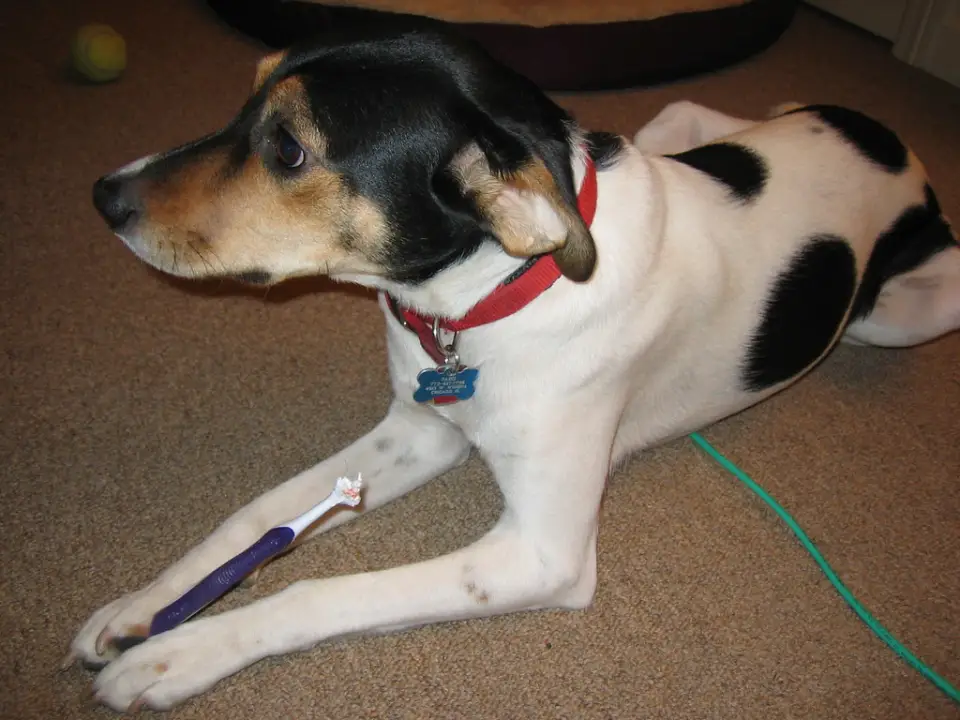
- A soft brush. VCA lists four types: angled-handle brushes that follow the curve of the mouth, multi-head brushes that clean several surfaces at once, small brushes that fit comfortably in your hand, and finger brushes. Finger brushes are often easiest for beginners but may not fit very small dogs. Having a couple of types on hand helps you reach hard-to-reach areas.
- Dog toothpaste. Choose a pet-specific product in a flavor your dog likes.
- Treats. Small, soft rewards for each stage of training.
Look for products with the seal of the Veterinary Oral Health Council (VOHC). The council reviews data from manufacturers against its standard for plaque and tartar control, and AAHA's dental guidelines point vets to VOHC-accepted products. Your vet can recommend one that suits your dog.
Step by step: building up to a full brush
Take your time. Go through these stages over days or weeks, depending on how comfortable your dog is. Pick a calm moment, such as after a walk. Move on only when your dog is relaxed.
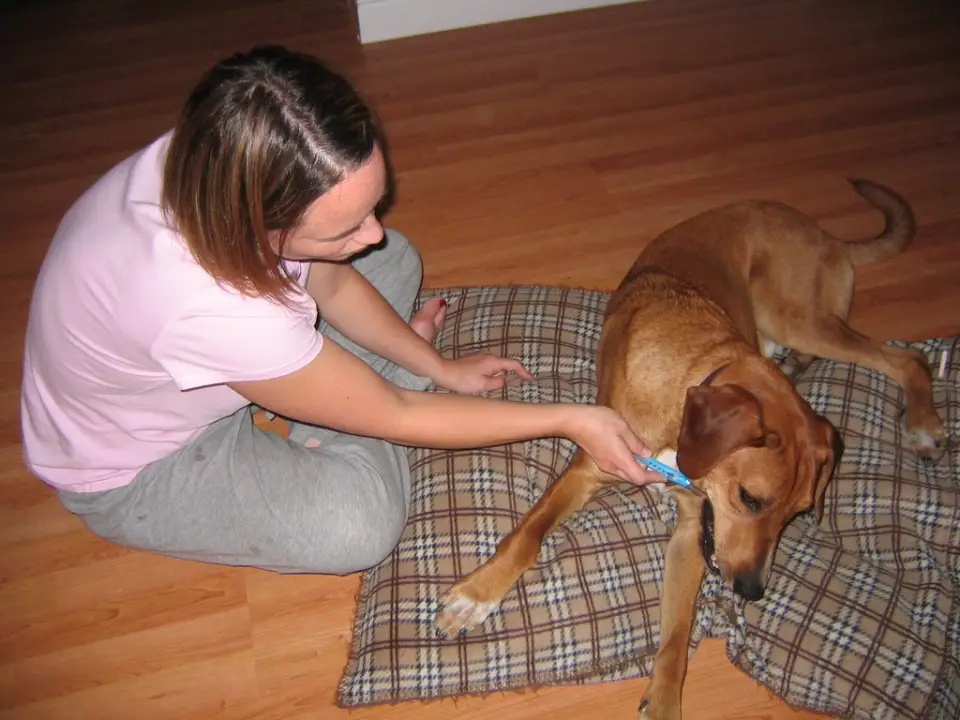
- Taste the paste. Put a tiny amount of pet toothpaste on your finger and let your dog lick it. Reward and repeat for a few days.
- Touch the mouth. Gently lift a lip, touch a few teeth and gums with your finger, then reward. Keep it very brief.
- Add the brush. Let your dog sniff and lick toothpaste off the brush. Reward.
- Brush a few teeth. Brush one or two teeth at the front with a small gentle motion for a couple of seconds, then reward.
- Work toward the full mouth. Add a few teeth at a time. According to the VOHC, plaque and tartar build up fastest on the cheek-facing surfaces of the upper teeth, so focus there if you cannot manage a full routine. The inside surfaces can be brushed when practical.
- Make it routine. The standard advice is to brush all teeth daily, ideally on every surface. A dog that will not tolerate the full sequence still benefits from any regular brushing, which is better than none.
Keep strokes gentle and never force the mouth open. If your vet suggests a particular technique for your dog, follow that, especially if your dog has gum problems.
What to expect and common problems
- Your dog pulls away. Go back a step and shorten the session. Pressure causes resistance.
- Your dog tries to chew the brush. Offer a second brush or toy to hold while you work, or try a finger brush.
- Your dog seems to be in pain. AAHA warns that brushing teeth with already inflamed gums will cause pain and make dogs resist, and that brushing should not start on inflamed gums without addressing the inflammation first. Stop and see your vet.
- You see no change. Brushing removes plaque but not calculus (tartar), which needs professional removal.
Signs your dog needs the vet
The AVMA lists these signs of dental disease. Have your vet check your dog's mouth if you notice:
- Bad breath.
- Broken or loose teeth, or discolored teeth or tartar.
- Trouble chewing, dropping food or drooling.
- Reduced appetite.
- Mouth pain, bleeding, or swelling around the mouth.
- Irritability or other behavior changes, which can also signal a problem.
Be careful when handling a painful mouth, because even gentle dogs can bite when they hurt.
Brushing is not the whole picture
Daily brushing does not replace professional care. The AVMA says your vet should check your pet's teeth and gums at least once a year, and AAHA notes that even daily brushing does not remove the need for anesthetized exams, x-rays and treatment. Most disease sits below the gumline, which is why the American Veterinary Dental College does not recommend anesthesia-free cleanings. They cannot clean or inspect below the gumline and can injure the pet or the person doing the procedure.
Dental chews, treats and diets may support brushing, but the AVMA warns that many dental products make health claims that not all of them meet. Check with your vet before you pick one, and choose products carrying the VOHC seal. Weight matters too, as chews add calories. For a guide, see how to tell if your dog is overweight.
Start today with the paste on your finger. A minute of calm practice each day adds up to a healthier mouth.
Frequently asked questions
Can I use human toothpaste on my dog?
No. Human toothpaste can contain fluoride, which pets should not swallow and which can upset the stomach, high levels of sodium, and in some cases xylitol, which is toxic to dogs. Use a toothpaste made for dogs.
How often should I brush my dog's teeth?
Daily brushing is ideal, but brushing several times a week still helps. Brushing removes plaque, not hardened tartar, so it does not replace professional dental care.
What does the VOHC seal mean?
The Veterinary Oral Health Council awards its seal to products intended to help control plaque, tartar or both, after reviewing the manufacturer's data against its standard. It is a useful way to sort dental products that have shown results from those that only make claims.
Are dental chews enough?
Many dental products make health claims that not all of them meet, so check with your vet before using any dental chew, treat or diet. Look for products with the VOHC seal, and remember that no chew replaces brushing and professional dental care.
Sources
More grooming guides
All guides
Grooming
Dog Paw Care Through the Seasons
Check paws after walks, rinse off salt and dirt, test pavement with your hand, moisturize cracked pads and trim nails m…
Grooming
How to Bathe a Dog (and How Often You Really Should)
Brush first, use lukewarm water and a dog shampoo, rinse well and dry fully. How often to bathe by coat type, and how t…
Grooming
How to Clean Your Dog's Ears Safely, Step by Step
Fill the canal with a vet-approved cleaner, massage, let your dog shake and wipe. No cotton swabs. How often to clean,…