Food safety
Can Dogs Eat Turkey bones?
No
No. Cooked turkey bones are brittle and can splinter, choke a dog or block the gut. If your dog already swallowed one, call your vet for advice now, do not make your dog vomit at home, and watch closely for gagging, drooling, vomiting or belly pain.
Why it’s unsafe
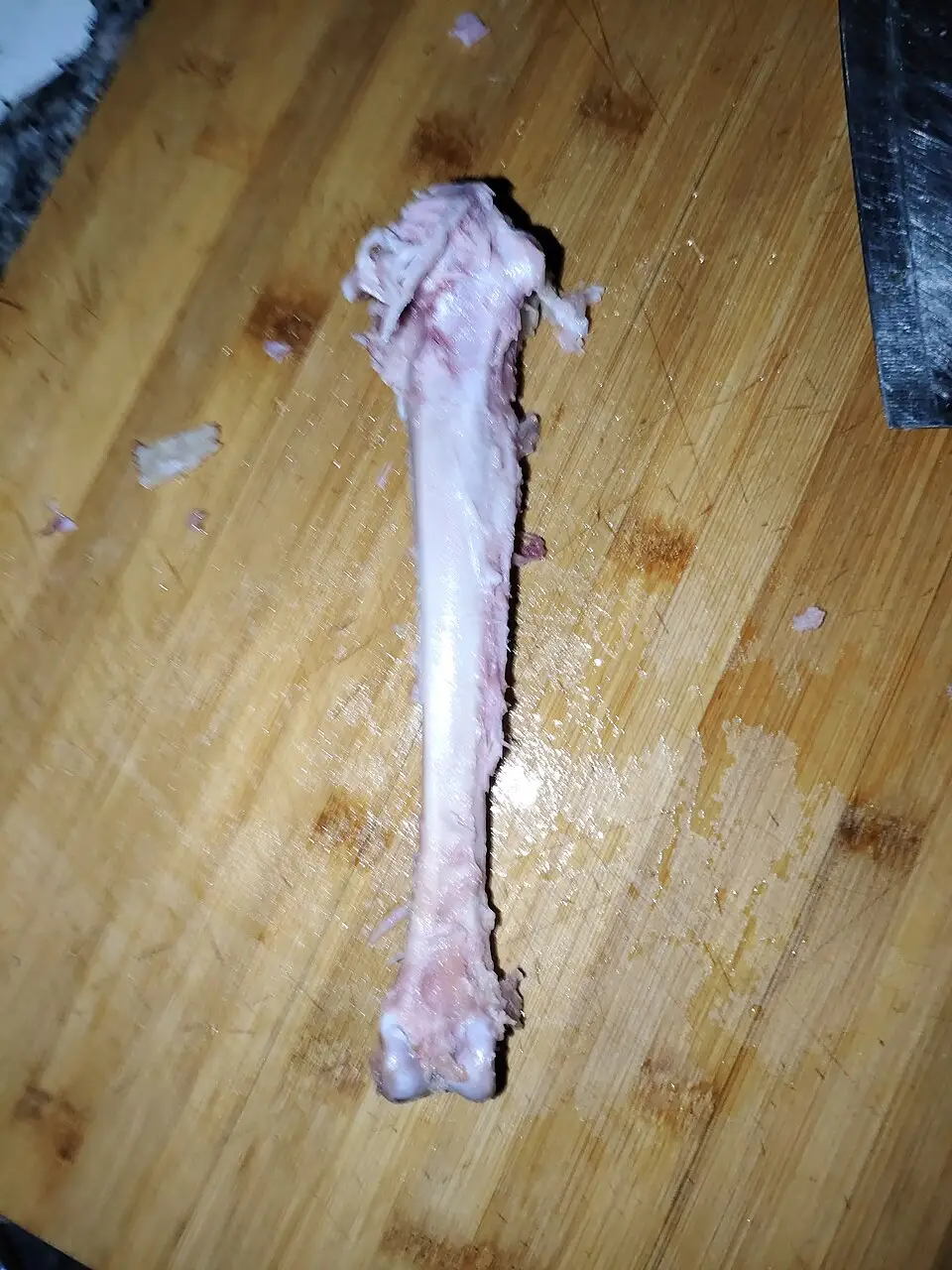
Cooked poultry bones are brittle, the AKC says, and vets caution against feeding cooked bones of any kind. The problems the AKC lists include cuts to the mouth and tongue, choking, and blockages in the throat or intestines that can need emergency surgery. VCA adds that sharp fragments can push through the wall of the stomach or intestine and cause peritonitis, a belly infection that can be fatal even with aggressive treatment, and that pieces reaching the colon can cause painful constipation.
Bones are also the most common thing to get stuck in a dog's esophagus (food pipe), according to the Merck Veterinary Manual, which is why the first hours matter most.
Cooked vs raw turkey bones
| Cooked bones (roast leftovers, carcass, drumsticks) | Raw bones (for example, raw turkey necks) | |
|---|---|---|
| Splintering | Brittle; the AKC says cooked bones splinter more easily and can take longer to dissolve | Less brittle, but the AKC says even raw bones can be dangerous |
| Choking and blockage | Yes | Yes; VCA warns that bone fragments can cause a complete intestinal blockage, which needs surgery |
| Bacteria | Cooking kills them | The AKC says any raw, meaty bone carries a risk of bacteria such as Salmonella; VCA lists E. coli, Salmonella and Listeria as possible contaminants of raw meat and bones |
| Our verdict | No | Only if your vet agrees |
Risks
- Cooked turkey bones are brittle and can splinter into sharp pieces
- Bones are the most common object to lodge in a dog's esophagus
- Fragments can block or pierce the stomach or intestines
- Pieces that reach the colon can cause painful constipation
- Raw turkey necks and other raw bones can carry Salmonella
What to give instead
Do not give your dog turkey bones of any kind, including the carcass, drumsticks, wings, neck or soup bones. If you want to share, pull a few pieces of plain, skinless turkey meat off the bone first and check by hand for small bones.
Bag the carcass and bones as soon as the meal is over, tie the bag and put it in a closed bin outdoors or behind a closed door. If your dog grabs a bone, the AKC suggests not chasing them, which can make them gulp it down, and instead offering something more tempting and swapping calmly.
For chewing, ask your vet which chews suit your dog, and supervise. See cooked bones for other table bones.
Related forms
| Food | Verdict | Why |
|---|---|---|
| Cooked turkey bones (carcass, drumsticks, wings) | No | Brittle; can splinter, choke or block the gut. |
| Smoked or deep-fried turkey bones | No | Still cooked bones; vets caution against cooked bones of any kind, per the AKC. |
| Raw turkey necks | With caution | Some owners feed them with vet guidance; the AKC notes the Salmonella risk and that raw bones can still be dangerous. |
| Plain boneless turkey meat | Yes | Small, skinless pieces; see our turkey page. |
If your dog already ate it
Right now
- Take away any bones that are left, calmly, by trading for a treat.
- Call your vet or an emergency clinic for advice, even if your dog seems fine. Say whether the bone was cooked or raw, which part it was, roughly how big, how many and when.
- Do not make your dog vomit at home. The AKC quotes a veterinarian warning that inducing vomiting at home can lead to a bone getting stuck in the esophagus.
- Do not feed bread to cushion the bone. The AKC says feeding right away is inadvisable because food can temporarily raise the stomach's pH, which can slow the bone's dissolution.
What to watch for, and when
| When | What you might see | What to do |
|---|---|---|
| Minutes to hours after | Gagging, choking sounds, drooling, repeated swallowing, stretching the neck out, bringing food back up, trouble breathing | Go to an emergency vet now. The AKC and Merck describe these as signs of a bone stuck in the esophagus, which is potentially life-threatening |
| Through the first day | Vomiting, not eating, belly pain, lethargy | Call your vet the same day; go in if vomiting is repeated. VCA lists these as signs of a stomach or intestinal blockage, where time is critical |
| In the days after | Straining to poop or passing only small amounts, ongoing vomiting | Call your vet. VCA says fragments can lodge in the colon or irritate the stomach |
| 12 to 24 hours, no signs | Eating normally, acting normally | The AKC's veterinary source says there is typically little to worry about if a dog is free of signs and eating normally within 12 to 24 hours of eating a poultry bone. Keep watching |
What the vet may do
Whether to make a dog vomit up a bone is a veterinary decision. A 2020 Clinician's Brief review by an emergency specialist lists large or sharp objects among the reasons not to induce vomiting.
If a bone is stuck in the esophagus, Merck says it should be removed right away, most often with an endoscope passed through the mouth (the AKC's veterinary source notes this is done under anesthesia). If that fails, vets may push it into the stomach, where bone may be digested. In a 2022 study of 129 dogs with bones in the esophagus or stomach, 42 of 45 stuck esophageal bones were cleared without surgery. Of 84 dogs with a bone in the stomach, 62 had it left in place to dissolve, with no complications reported. A blockage in the intestine is a surgical emergency, according to VCA.
Frequently asked questions
My dog ate a cooked turkey bone and seems fine. What should I do?
Call your vet for advice and watch closely. The AKC's veterinary source says there is typically little to worry about if a dog is free of signs and eating normally within 12 to 24 hours, but gagging, drooling, vomiting or belly pain at any point means a trip to the vet.
Should I make my dog throw up after eating a turkey bone?
No, not at home. The AKC quotes a veterinarian warning that this can leave the bone stuck in the esophagus. Your vet will decide whether vomiting is safe for that bone.
How long does it take a dog to pass a turkey bone?
None of the veterinary sources we checked gives a reliable time. Many bones that reach the stomach dissolve there: in one study, vets left 62 of 84 stomach bones in place to dissolve. Keep watching for vomiting, belly pain or straining for several days and call your vet if they appear.
Are raw turkey necks safe for dogs?
The AKC says some owners feed them in consultation with a vet, but any raw, meaty bone carries a risk of bacteria such as Salmonella, and even raw bones can be dangerous. Ask your vet first.
Written from veterinary sources by the Pawsplained editorial team. Not yet reviewed by a veterinarian; this is general information, not a diagnosis or treatment plan. Updated Nov 7, 2026. Editorial policy
Sources
- AKC: Can Dogs Eat Turkey?
- AKC: Can Dogs Eat Chicken Bones? (What to Do if Your Dog Ate Chicken Bones)
- VCA Animal Hospitals: Why Bones Are Not Safe for Dogs
- VCA Animal Hospitals: Ingestion of Foreign Bodies in Dogs
- Merck Veterinary Manual: Esophageal Foreign Bodies in Small Animals
- Barash NR et al. (2022) Outcomes of esophageal and gastric bone foreign bodies in dogs. Journal of Veterinary Internal Medicine
- Clinician's Brief: Emesis to Evacuate Gastric Foreign Bodies in Dogs and Cats (Cavanagh, 2020)