Training · 6 min read
How to Stop Counter Surfing and Begging at the Table
Quick answer
Stop counter surfing by keeping food out of reach, since every successful grab rewards the habit, and by teaching your dog to settle on a bed during cooking and meals. Stop begging by never paying it off, even once. Expect it to get worse before it fades, and keep treats under 10% of daily calories.
Key takeaways
- Counter surfing rewards itself, and even small amounts of forgotten food can start the habit, so management comes before training.
- Teach a place cue by luring your dog onto a bed, then build time, distance and distractions while you cook.
- Punishment can raise anxiety or make a dog sneakier, so reward the behavior you want instead.
- Begging often gets louder before it fades, which is called an extinction burst, so never give in when it escalates.
- If your dog eats something dangerous, call your vet or a poison helpline and do not make your dog vomit unless a vet says to.
In this guide
- Why do dogs counter surf and beg?
- How do you manage the kitchen first?
- How do you teach a place cue for cooking and meals?
- How do you teach leave it and drop it?
- How do you stop rewarding begging?
- How do you handle holiday meals and guests?
- What does a day-to-day routine look like?
- What if your dog eats something dangerous?
- When to get help
- Step by step
- FAQ
Dogs counter surf because it works, and they beg for the same reason. To stop counter surfing, keep food out of reach and teach your dog a calm place to settle while you cook. To stop begging, never pay it off. Both habits fade once your dog learns that the kitchen and the table do not deliver food.
Why do dogs counter surf and beg?
Counter surfing is self-rewarding, according to the AKC. Even small amounts of forgotten food can start the habit, so puppies and adolescents need close watching. Every time your dog finds something tasty, the habit gets stronger.
Begging follows the same logic. PetMD says food is a primary reinforcer for dogs, so giving in just once teaches your dog that begging pays. Punishing your dog does not solve either problem. The AKC says punishment can increase anxiety or make a dog sneakier, so reward alternatives instead.
How do you manage the kitchen first?
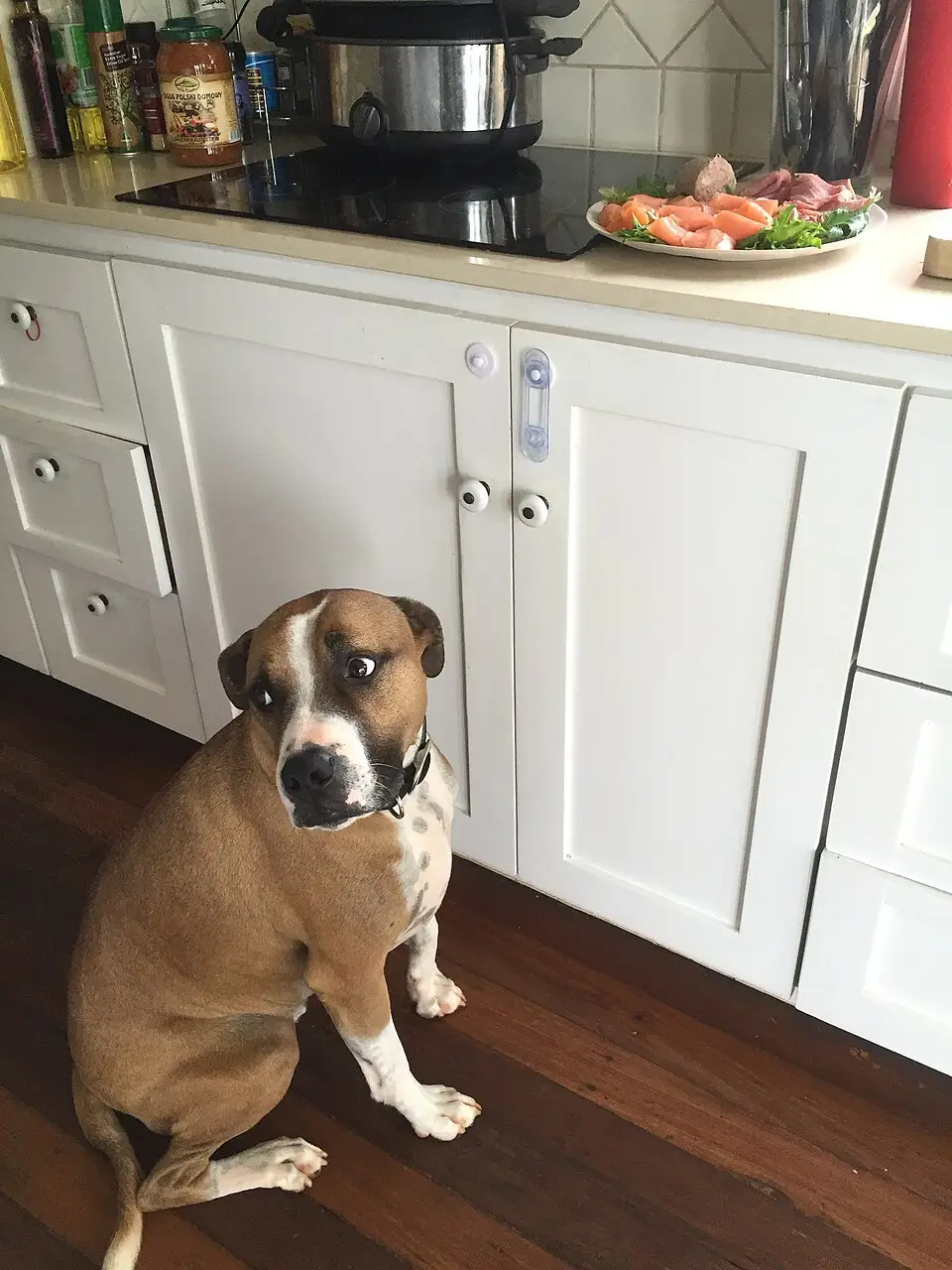
Management comes before training, because every successful grab undoes your work. The AKC suggests these steps:
- Keep food in airtight containers in cabinets or the fridge
- Leave nothing near the counter edge
- Put your dog in another room or behind a gate with a stuffed toy while you cook
- Set up a crate or bed near the kitchen as their "place"
Management is also the only answer when you are out. There is nothing to train when no one is home, so make sure food is out of reach before you leave.
How do you teach a place cue for cooking and meals?
Teach your dog to settle on a bed while you cook. The AKC suggests luring your dog onto the bed, then building duration, distance and distraction step by step. While you cook, toss treats onto the bed so your dog learns that this is where good things happen.
Start with a few seconds while you stand next to the bed. Then step away, then walk around the kitchen, then chop and stir. A raised cot bed or a washable mat that stays in the same spot makes a clear signal. Our basic commands guide explains how to build a reliable cue.
How do you teach leave it and drop it?
Leave it teaches your dog to ignore food on the floor, and drop it teaches them to give up what they have grabbed. The AKC teaches leave it this way: cover a treat on the floor with your hand, and reward with a different, better treat from your other hand when your dog stops trying. Never reward with the treat you covered. Uncover it gradually, then add a leash, and add the cue last.
For drop it, trade the item for a better treat. PetMD and the AKC say chasing a dog who has stolen food can make them swallow faster, so stay calm and trade instead.
How do you stop rewarding begging?
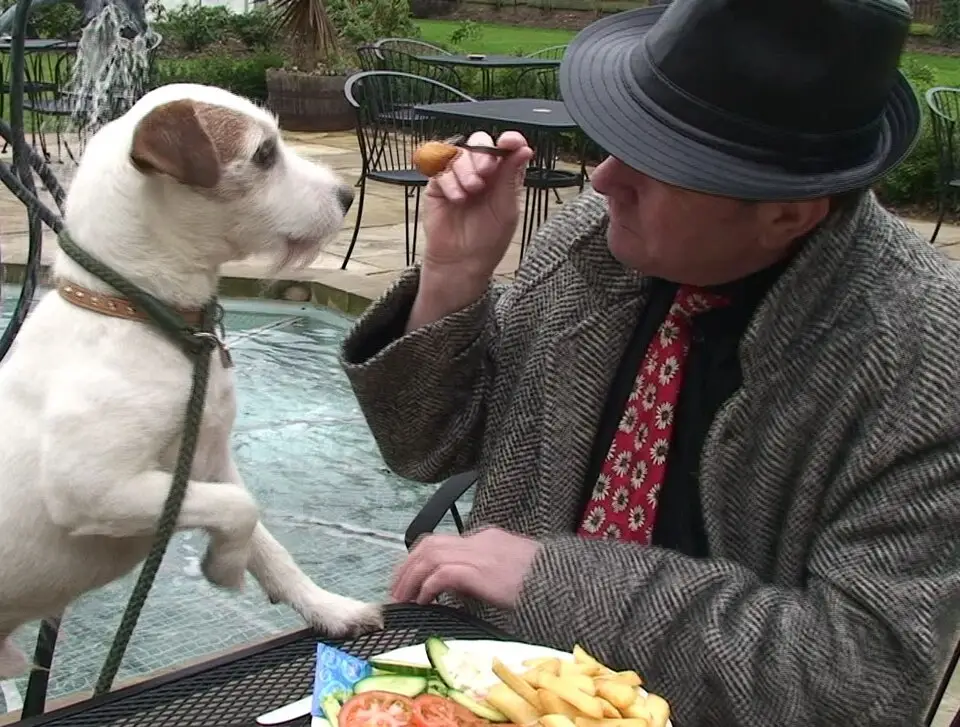
Ignore it completely, and give your dog something better to do. PetMD suggests feeding your dog their own meal in a food-dispensing toy or on a lick mat while you eat, or putting them on a mat away from the table or in a crate or pen.
Expect an extinction burst. PetMD says begging can get louder, with more whining, pawing or barking, before it fades. That is a sign that it is working, so stay consistent. Everyone in the house must follow the same rule, or the habit will survive.
Table food has costs too. PetMD says it can lead to obesity and pancreatitis, so keep treats under 10% of daily calories and do not feed your dog from your eating area. Our guide to checking your dog's weight shows how to check.
How do you handle holiday meals and guests?
Holidays raise the stakes, because the food is richer and the guests are more generous. The AKC says leave it keeps dogs away from appetizers and gifts on the floor, and a wait at doors stops dogs from crowding the kitchen when food comes out of the oven.
The AVMA lists these holiday hazards:
- Rich, fatty foods and skin can cause pancreatitis
- Bones can cause choking or blockage
- Xylitol has been linked to liver failure and death
- Chocolate, onions, grapes and raisins are poisonous
- Unbaked yeast dough can cause painful gas and dangerous bloating
Tell guests the rules before dinner, and give your dog a stuffed toy in a quiet room. Our guide to stopping a dog from jumping on guests helps with the doorway. Our Thanksgiving safety guide covers the holiday menu in more detail.
What does a day-to-day routine look like?
Here is how the pieces fit together, based on the AKC and PetMD advice.
- Before you cook: clear the counter edge, put food in cabinets or airtight containers, and send your dog to their bed with a stuffed toy or lick mat.
- While you cook: toss treats onto the bed so your dog learns that this is where good things happen, and use leave it if something drops.
- At mealtimes: feed your dog on their own mat, away from the table, and never pay off begging, even once.
- When you leave: make sure nothing tasty is within reach, because there is nothing to train when no one is home.
- With guests: tell everyone the rules before dinner.
Keep treats under 10% of daily calories (PetMD). If the begging gets louder at first, that is the extinction burst, and it is a sign to stay consistent, not to give in.
What if your dog eats something dangerous?
Act fast. Call your vet, ASPCA Animal Poison Control at (888) 426-4435 or Pet Poison Helpline at (855) 764-7661 (US only; fees may apply). Outside the US, call your local emergency vet. Do not make your dog vomit unless a vet tells you to.
Tell them what your dog ate, how much and when. Our guide on what to do if your dog eats something toxic explains the steps.
When to get help
Ask a certified trainer or your vet if the problem is not improving after several weeks of steady work. Also ask for help if your dog guards food, snaps when you approach, or seems anxious rather than just hungry. Sudden new interest in food can have a medical cause, so check with your vet if appetite has changed.
Step by step
- Clear the counterStore food in cabinets, the fridge or airtight containers, and keep nothing near the counter edge.
- Teach a placeLure your dog onto a bed and reward them there, then build time, distance and distractions.
- Teach leave itCover a treat with your hand and reward with a different, better treat when your dog stops trying.
- Feed your dog separatelyGive a stuffed toy or lick mat on their mat while you eat, away from the table.
- Stay consistentNever reward begging, and ask guests to follow the same rule.
Frequently asked questions
Why does my dog counter surf?
Because it pays off. The AKC says counter surfing is self-rewarding, and even small amounts of forgotten food can start the habit. Watch puppies and adolescents closely.
How do I stop counter surfing when I'm not home?
With management, because there is nothing to train when no one is there. Keep food in cabinets or the fridge, or keep your dog in another room or behind a gate with a stuffed toy.
Why does my dog keep begging even though I ignore it?
PetMD says begging often gets louder, with more whining, pawing or barking, before it fades. That is called an extinction burst. If you give in at that point, you teach your dog that pushing harder works.
Is it OK to give my dog table scraps?
Only small amounts of dog-safe food, away from the table. PetMD says table food can lead to obesity and pancreatitis, and treats should stay under 10% of daily calories. Many holiday foods are dangerous.
What if my dog grabbed food off the counter?
Work out what they ate and whether it is toxic, then call your vet or a poison helpline. Do not make your dog vomit unless a vet tells you to.
Sources
More training guides
All guides
Training
7 Basic Dog Commands and How to Teach Each One
Sit, down, stay, come, leave it, drop it and loose-leash walking, taught step by step with rewards, plus hand signals a…
Training
How to Crate Train a Puppy, Step by Step
Crate training works when the crate feels like a safe den, not a punishment. Here is a gradual plan, from sizing to nig…

Training
How to Potty Train a Puppy: A Routine That Works
Potty training comes down to frequent trips outside, one toilet spot, instant rewards and close supervision. Here is th…