Grooming · 6 min read
How to Trim Dog Nails at Home Without Hitting the Quick
Quick answer
Trim your dog's nails about every 3 to 4 weeks. Take off tiny slivers with sharp clippers or a grinder, stop before the pink quick, and reward your dog after every nail. On black nails, stop when you see a chalky white ring or a dark dot in the center of the cut surface.
Key takeaways
- Most dogs need a nail trim about every 3 to 4 weeks, sooner if the nails touch the floor or click on hard surfaces.
- The quick is the pink inner part of the nail with blood vessels and nerves, so cutting into it hurts and bleeds.
- On dark nails, take very small slivers and stop at a chalky white ring or a dark dot in the center of the cut.
- If a nail bleeds, press styptic powder on it, or flour or cornstarch if you have none, and call your vet if bleeding continues.
- Nervous dogs learn to accept trims over days or weeks with treats, one nail at a time, and a vet can advise on sedation.
In this guide
Trim your dog's nails a little at a time, about every 3 to 4 weeks, and stop before you reach the quick. With sharp clippers or a grinder, a calm setting and plenty of treats, most owners can do this at home. The main skills are knowing where the quick is and going slowly on dark nails.
How often to trim your dog's nails
Most dogs need a trim about once a month. VCA says inactive dogs may need one every 3 weeks, and dogs that walk a lot on concrete may go longer. The AKC gives a range of every 3 to 4 weeks, depending on activity and how fast the nails grow.
Rather than counting days, check weekly. Nails are too long when they touch the ground or click on hard floors (VCA). PetMD adds that nails tapping on the floor, or reaching past the toe pads when your dog stands, are also signs.
Long nails are more than a nuisance. The AKC says they can splay the toes, deform the feet and strain tendons. PetMD notes they can curl into the paw pads, causing infection and changes in stance and gait. If your dog starts limping, check the nails along with the rest of the paw. Our paw care guide uses the same schedule.
What you need
Gather everything before you bring your dog over:
- Sharp clippers (scissor or guillotine style) or a nail grinder
- Styptic powder, in case you nick the quick
- Soft, small treats, or a lick mat with a dog-safe spread
- A non-slip surface and good light
If you fill a lick mat with peanut butter, use only a kind with no xylitol, which is toxic to dogs. A helper who can steady your dog makes the first few trims much easier.
Find the quick first
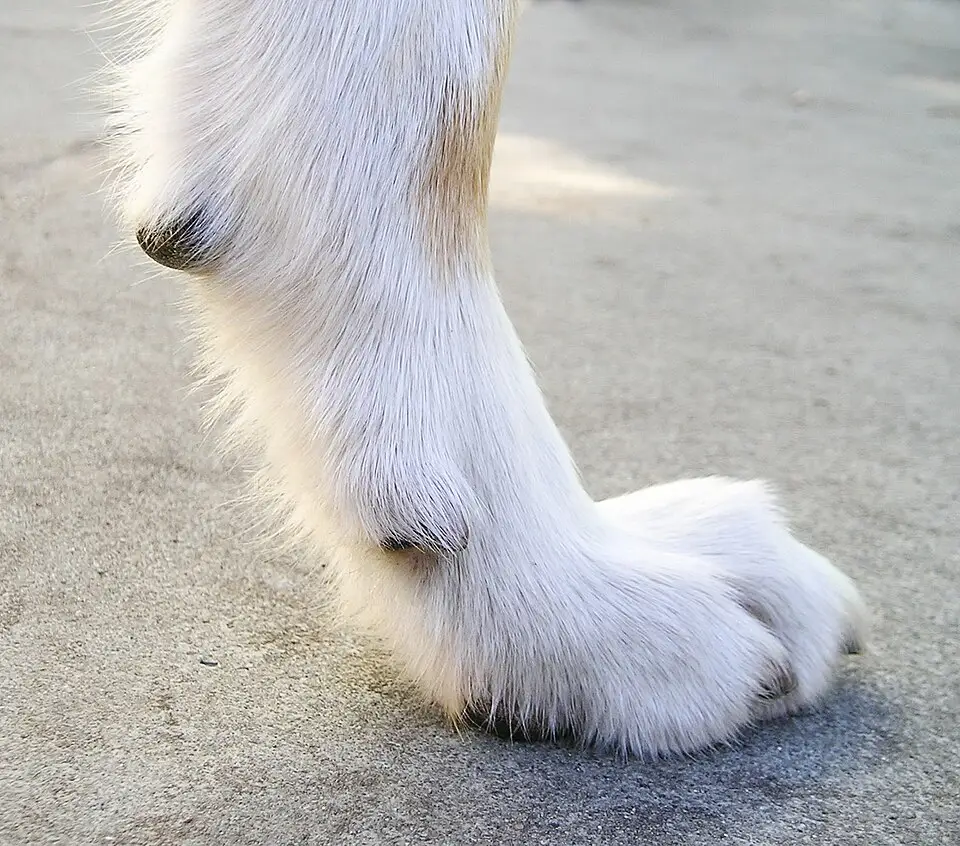
The quick is the pink inner part of the nail, where the blood vessels and nerves run. The AKC says cutting into it hurts and bleeds, so locating it is the most important step.
On light or clear nails, you can see the pink quick through the nail. VCA suggests leaving about 2 to 3 mm (roughly 1/8 in) of nail beyond it. Take small clips of 1 to 2 mm and stop where the nail starts to curve.
Dewclaws, the extra claws higher up the leg, need trimming too. They never touch the ground, so they can overgrow and curl into the pad (VCA, PetMD).
How to trim, step by step
- Get your dog used to touch. Handle each paw and hold a nail for a moment, then reward calm behavior.
- Hold the paw steady. Support the paw gently and spread the toes if needed.
- Clip a sliver. Cut only 1 to 2 mm at a time, at the angle of the nail.
- Check the cut surface. Look for the signs that the quick is near (see the next section).
- Reward every nail. A treat after each nail tells your dog that trims are worth putting up with.
- Stop early if your dog gets upset. Do a few nails today and the rest tomorrow.
Black nails and overgrown nails
Black nails need extra care because you cannot see the quick. Trim only tiny amounts. The AKC says a chalky white ring on the cut surface means the quick is close, and PetMD describes a black dot in the center of the cut surface. Stop when you see either one.
For overgrown nails, do not try to fix them in one session. Trim a little off every few days, since regular trimming makes the quick recede (AKC). The AKC gives no timeline, so do not expect the quick to shrink in a week. If the nails are curling into the pads, or you cannot find a safe cutting point, ask your vet or a groomer to take the first trim.
Clippers or a grinder?
Both guillotine and scissor clippers work, according to VCA and PetMD. A grinder gives a smooth edge and lowers the risk of hitting the quick. It can also catch long hair in the head, burn the skin if it slips, and create dust, so use it outdoors and keep hair away from the head. A grinder may not suit a jumpy dog because of the noise and vibration.
| Tool | Good for | Watch out for |
|---|---|---|
| Clippers | Quick trims, dogs worried by noise | Splitting thick nails if blunt |
| Grinder | Smooth edges, dark nails, small steps | Noise, dust, hair tangles, heat |
Pick the tool your dog accepts best, and replace dull clipper blades.
If you cut the quick
Stay calm, because it happens to everyone eventually. Apply styptic powder to the nail and press. If you have none, VCA and PetMD say flour works, and VCA and the ASPCA mention cornstarch.
VCA's paw injury advice is to apply pressure, try a cauterizing powder if bleeding has not stopped within 5 minutes, and see your vet if bleeding does not stop with pressure or cauterizing materials. The AKC also says to contact your vet if bleeding does not stop. Our first aid basics covers other minor injuries. If a nail keeps bleeding, or a nail is torn, cracked or swollen, call your vet.
Help a nervous dog accept nail trims
Build tolerance over days or weeks, as VCA and the AKC suggest. Start by touching the paws and rewarding your dog, then trim one nail, then a few. A lick mat keeps your dog busy while you work, and a helper can hold your dog.
Keep sessions short and stop before your dog is stressed. For a very distressed dog, ask your vet about sedation (VCA), and never give human sedatives. A vet or groomer can handle trims until your dog is ready for home sessions.
When to see your vet or a groomer
See your vet if a nail is torn, cracked, swollen or bleeding for a long time, if your dog is limping, or if the nails have grown into the pads. A groomer or vet can also show you in person how to trim your own dog's nails, which helps if you are nervous about black nails.
Step by step
- Get your dog comfortableTouch the paws, hold a nail, and reward calm behavior before you cut anything.
- Find the quickOn light nails, look for the pink part. On dark nails, plan to take only tiny slivers.
- Trim a sliver at a timeClip or grind 1 to 2 mm at a time and stop where the nail starts to curve.
- Check the cut surfaceA chalky white ring or a dark dot means the quick is close, so stop.
- Reward and finishTreat after every nail, trim the dewclaws too, and keep styptic powder within reach.
Frequently asked questions
How often should I trim my dog's nails?
Most dogs need a trim about every 3 to 4 weeks, according to VCA and the AKC. Inactive dogs may need one every 3 weeks, while dogs that walk a lot on concrete may go longer. Check weekly, and trim sooner if the nails touch the floor or click on hard surfaces.
How do I trim black dog nails without cutting the quick?
Take tiny slivers and look at the cut surface each time. The AKC says a chalky white ring means the quick is close, and PetMD describes a black dot in the center of the cut surface. When you see either, stop.
Can I make the quick shorter?
Regular trimming makes the quick recede, according to the AKC. The source gives no timeline, so keep trimming on schedule and do not expect a fast change.
What do I do if my dog's nail is bleeding?
Press styptic powder on the nail. VCA and PetMD say flour works if you have none, and VCA and the ASPCA mention cornstarch. If the bleeding does not stop with pressure, call your vet.
Is a nail grinder better than clippers?
Not always. A grinder leaves a smooth edge and lowers the risk of hitting the quick, but it can catch long hair, burn skin if it slips, make dust and frighten a jumpy dog. Both clippers and grinders work, so choose the one your dog tolerates.
Can I trim nails without clippers?
Yes, a grinder is the usual alternative. The ASPCA also mentions smoothing the nails with an emery board. Ask a groomer or your vet to demonstrate if you are unsure.
Sources
More grooming guides
All guides
Grooming
Dog Paw Care Through the Seasons
Check paws after walks, rinse off salt and dirt, test pavement with your hand, moisturize cracked pads and trim nails m…
Grooming
How to Bathe a Dog (and How Often You Really Should)
Brush first, use lukewarm water and a dog shampoo, rinse well and dry fully. How often to bathe by coat type, and how t…
Grooming
How to Brush Your Dog's Teeth Safely, Step by Step
Brush with a pet toothpaste, never human toothpaste. A gentle step-by-step method, how often to brush, VOHC-accepted pr…