Plant safety
Is Money Tree Toxic to Dogs?
Pachira aquatica · Malvaceae
Also called Money plant, Braided money tree
Non-Toxic to dogs
No. ASPCA lists money tree (Pachira aquatica) as non-toxic to dogs, though its entry lists nausea, vomiting and loose stool as possible signs if it is eaten. Jade plant, also sold as a money plant, is toxic.
Why it’s considered safe for dogs
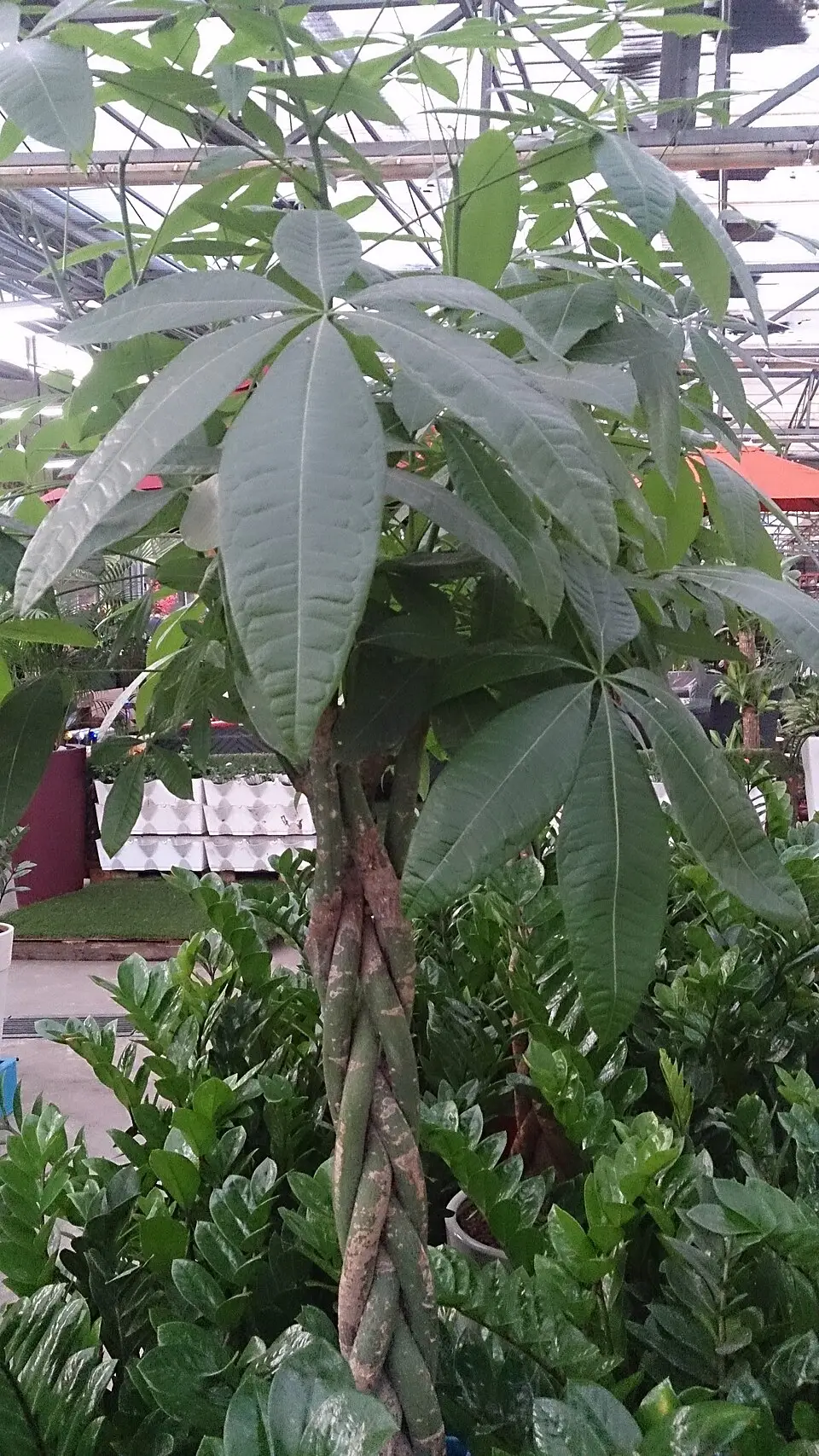
The money tree, Pachira aquatica, is the houseplant with a braided trunk and a tuft of glossy, hand-shaped leaves. ASPCA lists it as non-toxic to dogs and names no toxic principle. Its entry still lists nausea, vomiting and loose stool as signs, which is a good reminder that "non-toxic" is not the same as "safe to eat".
The tricky part is the name. "Money tree" and "money plant" are used for several unrelated plants. Jade plant (Crassula ovata, listed by ASPCA as Crassula argentea) is sold as a lucky plant or money plant, according to NC State Extension, and ASPCA lists it as toxic to dogs. Our jade plant page lists the signs.
So the label matters more than the nickname. Pachira is usually sold with a braided trunk topped with palm-like clusters of leaves, while jade has thick, fleshy, oval leaves. Check the Latin name before you decide where to put it.
Which "money plant" do you have?
At least four unrelated houseplants are sold as a money tree or money plant, and their ratings differ:
| Sold as | Botanical name | How to recognize it | ASPCA status for dogs |
|---|---|---|---|
| Money tree, money plant | Pachira aquatica | Straight trunks, often braided, topped with hand-shaped leaves | Non-toxic |
| Jade plant, also money plant or lucky plant | Crassula ovata (ASPCA: C. argentea) | Thick, fleshy, oval leaves on thick, scarred stems | Toxic |
| Pothos, called money plant in many parts of the Indian subcontinent | Epipremnum aureum | Trailing vine with glossy, heart-shaped leaves | Toxic |
| Chinese money plant, pancake plant | Pilea peperomioides | Round, coin-like leaves with the stalk attached at the center, like a lily pad | Not listed by ASPCA |
The Chinese money plant is the gap. The ASPCA doesn't list it, though it lists other Pilea species, such as aluminum plant (Pilea cadierei), as non-toxic, and NC State Extension describes the Chinese money plant as safe for pets. That's a reassuring sign but not a poison-control rating, so keep it out of reach like any plant.
If your dog ate money tree
A few chewed leaves usually mean a brief stomach upset at most. ASPCA lists the money tree as non-toxic but names nausea, vomiting and loose stool as possible signs, so some vomiting or diarrhea can happen.
Call your vet if the signs persist, your dog ate a lot, or the plant was treated with fertilizer or a pesticide. Also call if there is any chance the plant is a jade plant instead. Call right away if your dog is drooling heavily, pawing at its mouth or struggling to swallow, which can point to an irritant plant such as pothos. In the US, ASPCA Animal Poison Control is at (888) 426-4435 and Pet Poison Helpline at (855) 764-7661 (fees may apply); elsewhere, call your local emergency vet.
Do not make your dog vomit at home. Take a photo of the plant and its tag to the vet.
Keeping your dog safe
Money trees get tall and top-heavy, so anchor the pot where a swishing tail or a bounding dog will not tip it. A table or stand keeps the lower leaves out of reach.
Store plant food, fertilizer and sprays in a closed cabinet, and avoid treating plants your dog can reach.
Keep the tag from the garden center, and if your plant doesn't match any row in the table above, treat it as unknown until you can check. Other houseplants ASPCA lists as non-toxic include peperomia and ponytail palm.
Frequently asked questions
Is a money tree toxic to dogs?
ASPCA lists Pachira aquatica as non-toxic to dogs but notes nausea, vomiting and loose stool. Call your vet if the signs last or your dog ate a lot.
Is jade plant a money tree?
Jade plant is often sold under the names lucky plant or money plant, and ASPCA lists it as toxic to dogs. Check the Latin name: Pachira aquatica is the braided money tree.
Why does ASPCA list signs for a non-toxic plant?
The entry doesn't explain it, but the signs it lists, nausea, vomiting and loose stool, are a mild stomach upset rather than serious poisoning.
What if my plant turns out to be a jade plant?
ASPCA lists jade plant as toxic to dogs. Call your vet or a poison hotline if your dog ate any, and bring the plant or a photo.
Is the Chinese money plant toxic to dogs?
It isn't in the ASPCA database. NC State Extension describes Pilea peperomioides as safe for pets, and the ASPCA lists other Pilea species as non-toxic, but there is no direct poison-control rating.
Is pothos a money plant?
Pothos is commonly called money plant in many parts of the Indian subcontinent. The ASPCA lists it as toxic to dogs, so it's a very different plant from the money tree.
Written from veterinary sources by the Pawsplained editorial team. Not yet reviewed by a veterinarian; this is general information, not a diagnosis or treatment plan. Updated Nov 7, 2026. Editorial policy