Behavior · 5 min read
How Much Do Dogs Sleep? Normal Hours by Age
Quick answer
Most dogs sleep 12 to 16 hours a day: about 6 to 8 hours overnight plus 4 to 8 hours of naps, according to PetMD. Puppies and seniors sleep more, and estimates for puppies vary. A sudden change in sleep, especially with appetite loss or low energy, is a reason to see your vet.
Key takeaways
- Most adult dogs sleep 12 to 16 hours in 24, made up of a long night's sleep plus several naps.
- Puppy sleep estimates vary from 10 to 20 hours a day, so a sudden change matters more than the exact number.
- Senior dogs tire more easily and sleep more, but a sharp change can point to pain, illness or cognitive decline.
- Size and breed play a part: giant breeds tend to rest more, while retrievers, hounds and spaniels need less.
- A supportive bed in a quiet spot helps every dog sleep well, and matters most for puppies and dogs with sore joints.
In this guide
Most dogs sleep 12 to 16 hours out of every 24, so a dog who naps through most of your day is usually perfectly normal. Puppies and older dogs sleep even more. What matters most is your own dog's usual pattern, because a sudden change in sleep can be one of the first signs that something is wrong.
How much sleep is normal for a dog?
PetMD, in an article reviewed by a veterinarian, says most dogs sleep 12 to 16 hours a day. For an adult dog that usually breaks down into about 6 to 8 hours overnight plus 4 to 8 hours of naps. The AKC describes a typical dog's day as about half asleep, about 30 percent awake but resting, and only about 20 percent active.
That can feel like a lot if you compare it with your own night's sleep. Part of the reason is the kind of sleep dogs get. The AKC says dogs spend only about 10 percent of their sleep in the deep, dreaming REM stage, compared with up to 25 percent for people, so they may need more total sleep to get the same rest. The AKC does not cite a study for this figure, so treat it as a general explanation rather than a hard rule.
How much do puppies, adults and seniors sleep?
Sleep needs change with age. The table shows what the main sources say.
| Life stage | Typical sleep | Source |
|---|---|---|
| Adult dog | 12 to 16 hours a day: about 6 to 8 hours overnight plus 4 to 8 hours of naps | PetMD |
| Puppy | Estimates vary: up to 18 to 20 hours a day, or 10 to 14 hours can be normal | AKC, PetMD, VCA |
| Senior dog | More than an adult, because older dogs tire more easily (no hour figure given) | AKC, PetMD |
Estimates vary for puppies. AKC and PetMD say young puppies may sleep up to 18 to 20 hours a day, while VCA says 10 to 14 hours can be normal. Either way, a young puppy sleeps most of the day, and a sudden change matters more than the number. Puppies often drop off mid-play, which is normal. PetMD advises not waking a napping puppy when you can avoid it, and moving them somewhere quiet if your home is noisy. Our crate training guide shows how a crate can become a calm place to rest.
Senior dogs slow down and need more rest, as both the AKC and PetMD note. That is expected with age, but more sleep together with stiffness, confusion or a loss of interest in food is worth a vet visit.
Why do dogs sleep so much?
Dogs sleep a lot because their bodies and brains need more rest than ours do, PetMD explains. Rest tends to follow effort: PetMD says a dog who keeps up with a busy, outdoorsy owner may need extra sleep to recover, and that a puppy who plays hard and then crashes is probably normal.
Boredom is another reason. PetMD lists boredom, illness, recovery from a procedure and big life changes, such as a move or the loss of a companion, as things that can increase sleep. A dog with nothing to do often just sleeps. If you think that describes your dog, our guide to how much exercise a dog needs is a good place to start.
What affects how much your dog sleeps?
Several things shift the numbers from dog to dog:
- Age. Puppies and seniors sleep more than adults.
- Size and breed. The AKC says bigger breeds tend to doze more and working breeds stay awake longer for their tasks. PetMD names Mastiffs, Great Danes, Pekingese and Shih Tzus as breeds that tend to rest more, while retrievers, hounds and spaniels need less rest.
- Activity level. PetMD names activity level, along with age and breed, as one of the main things that set how long a dog sleeps.
- Boredom and stress. A dog left alone with nothing to do may sleep simply to pass the time.
- Health. Illness and recovery both raise the need for rest.
If your dog sleeps a lot but wakes up bright, eats well, plays and shows none of the warning signs below, the long hours are most likely normal for their age, breed and activity level.
How can you help your dog sleep well?
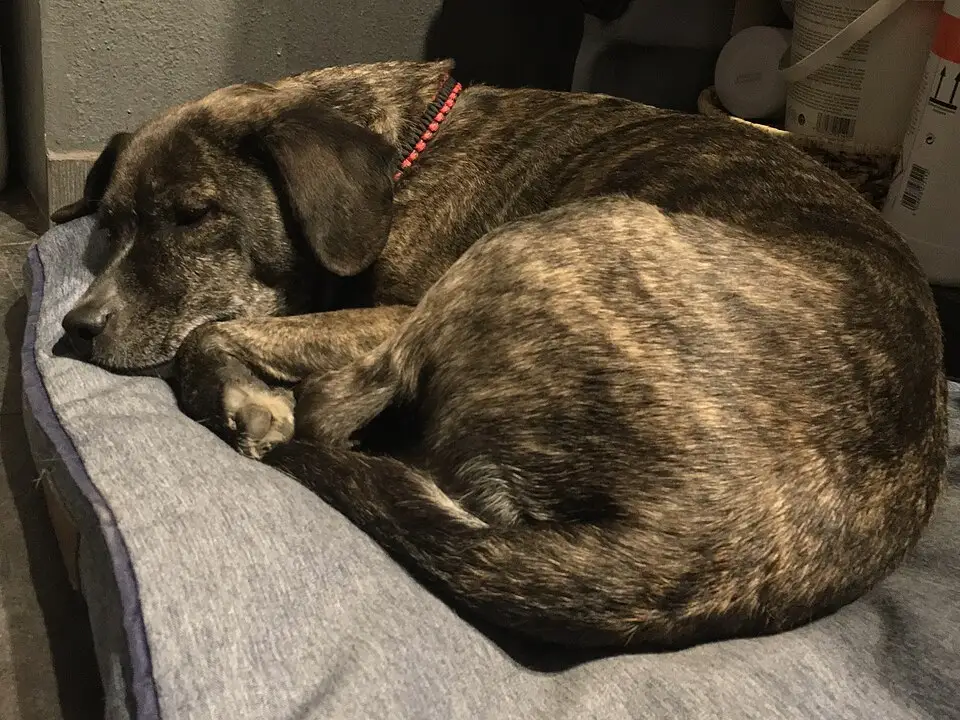
A good bed and a quiet spot go a long way. The AKC says dogs benefit from having their own quiet sleeping spot, and that a supportive bed helps dogs with arthritis or hip dysplasia and supports growing puppies. Pick a size that lets your dog stretch out, and put it away from the busiest part of the house. If your dog likes to curl up, a donut-style bed may suit them, while a dog who sprawls may prefer a flat, supportive bed.
A few simple habits also help:
- Keep a steady routine for meals, walks and bedtime.
- Burn off energy with exercise and mental games during the day.
- Give puppies quiet time to nap undisturbed.
- Keep a bed in each room where the family spends time, if your dog likes to be near you.
Dogs of every age spend so many hours asleep that the bed gets heavy use, so it is worth choosing a good one.
What are the signs of a sleep problem?
Watch for changes from your own dog's normal. PetMD lists these warning signs:
- A sudden change in sleep pattern, either far more or far less
- Loss of appetite
- Hiding
- Less interest in play
- Restlessness
- Lethargy
Several medical problems can raise a dog's need for sleep. The AKC lists hypothyroidism, diabetes, depression and possible hearing loss, and PetMD lists parasites, thyroid problems, heart disease and pain. Cognitive dysfunction can also cause restlessness at night and more napping by day, according to PetMD. Our pages on lethargy and hypothyroidism explain more.
Flat-faced breeds, such as the Pug, can have sleep apnea, according to VCA. Heavy snoring or gasping at night in a flat-faced dog is a reason to call your vet.
When to call your vet
A sudden change in how much your dog sleeps, especially with appetite loss or low energy, is a reason to see your vet. Call as well if your dog:
- Is hard to wake, which VCA treats as an emergency
- Seems confused
- Hides, or loses interest in play or food
- Paces or seems restless at night
- Snores loudly or gasps for air during sleep, particularly a flat-faced breed
Your vet can check for pain, thyroid disease, diabetes and other causes, and can tell you whether your dog's sleep is normal for their age and breed.
Frequently asked questions
How many hours a day do dogs sleep?
Most dogs sleep 12 to 16 hours a day, according to PetMD. For an adult that usually means about 6 to 8 hours overnight plus 4 to 8 hours of naps during the day. Puppies and older dogs often sleep more.
How much should a puppy sleep?
Estimates vary. AKC and PetMD say young puppies may sleep up to 18 to 20 hours a day, while VCA says 10 to 14 hours can be normal. Either way, a young puppy sleeps most of the day, and a sudden change matters more than the number.
Is it normal for my dog to sleep all day?
Often yes, because dogs spend about half the day asleep and another 30 percent resting, according to the AKC. It becomes a concern when the change is sudden or comes with appetite loss, hiding, less interest in play or lethargy. Then call your vet.
Do bigger dogs sleep more?
Often they do. The AKC says bigger breeds tend to doze more, and PetMD names Mastiffs, Great Danes, Pekingese and Shih Tzus as breeds that rest more, while retrievers, hounds and spaniels need less rest. Individual dogs still vary.
Why is my old dog awake at night?
Cognitive dysfunction, a canine form of dementia, can cause restlessness at night and more napping by day, according to PetMD. Pain can also keep a senior dog up. Mention night waking to your vet, because treatment works better when it starts early.
Sources
More behavior guides
All guides
Behavior
How to Help a Dog Who Is Scared of Fireworks
Give your dog a quiet room, mask the noise and keep ID current. Then ask your vet about help and start gradual training…
Behavior
How to Stop a Dog From Chewing Everything
Find out why your dog chews, then dog-proof, supervise, offer better chews and add exercise. What works for chewing whe…
Behavior
Separation Anxiety in Dogs: Signs and Training Plans
Separation anxiety is panic, not spite. Learn the signs, how to rule out other causes, a step-by-step alone-time plan,…