Behavior · 7 min read
How to Stop a Dog From Chewing Everything
Quick answer
To stop destructive chewing, work out why your dog does it, then remove temptations, supervise, offer approved chews and add exercise and brain work. Interrupt calmly, swap in a chew toy and praise. Never punish after the fact. If chewing happens only when you are out, suspect separation anxiety.
Key takeaways
- Dogs chew because of teething, boredom, anxiety, hunger, stress or a lack of exercise, so the right fix depends on the cause.
- Keep a diary and video your dog while you are out to find out when and why the chewing happens.
- Rotate chew toys every couple of days, and feed part of the daily food in puzzle toys at the times your dog usually chews.
- Taste deterrents help only alongside training, and the ASPCA says to reapply them daily for 2 to 4 weeks.
- Do not punish chewing after the fact, tape the mouth, muzzle the dog to stop chewing, or crate for over 6 hours.
In this guide
- Why do dogs chew things they shouldn't?
- How do you figure out the cause?
- How do you dog-proof and supervise?
- What should my dog chew instead?
- How much exercise and brain work does a chewer need?
- Do taste deterrents work?
- How do you stop chewing when your dog is home alone?
- What is a simple plan to start with this week?
- What not to do
- When to call your vet or a behaviorist
- Step by step
- FAQ
Dogs chew for a reason, and the fix starts with finding it. Remove temptations, supervise, offer better things to chew and add exercise and brain work. When you catch your dog chewing something off-limits, interrupt calmly and swap in an approved chew. Punishing afterward does not work.
Why do dogs chew things they shouldn't?
Chewing is normal dog behavior, but it becomes a problem when it targets your belongings. The ASPCA and VCA list these common causes:
- Teething. The ASPCA says it usually ends around 6 months, and VCA says 3 to 6 months.
- Separation anxiety. Chewing happens mostly when the dog is alone.
- Boredom and too little exercise.
- Hunger, especially on calorie-restricted diets.
- Fabric sucking, which may be linked to weaning before 7 to 8 weeks.
- Stress or frustration.
Chewing at paws, feet or skin is usually an itch rather than a behavior problem. See the itching page if that is what your dog is doing.
How do you figure out the cause?
Keep a diary of when and where the chewing happens and what happened just before, as VCA advises. Then video your dog while you are out. A short clip often shows the answer, whether your dog is pacing and whining or just bored.
| What you see | Likely cause | First step |
|---|---|---|
| Chewing only when alone, with whining or pacing | Separation anxiety | Work with your vet; read our separation anxiety guide |
| Young puppy chewing everything | Teething | Cold, safe teething toys |
| Chewing in the evening or when idle | Boredom | More exercise and puzzle toys |
| Chewing around mealtimes | Hunger | Ask your vet about feeding |
How do you dog-proof and supervise?
Remove what you do not want chewed. Shoes, remote controls, kids' toys and laundry belong behind a door or on a high shelf. Our puppy-proofing guide works for adult dogs too.
When you cannot watch, confine your dog in a crate or a dog-proofed room for no more than 6 hours, the ASPCA says. Our crate training guide shows how to make the space a comfortable one. Do not give old shoes or cushions as toys, because the ASPCA says that confuses your dog about what is allowed.
What should my dog chew instead?
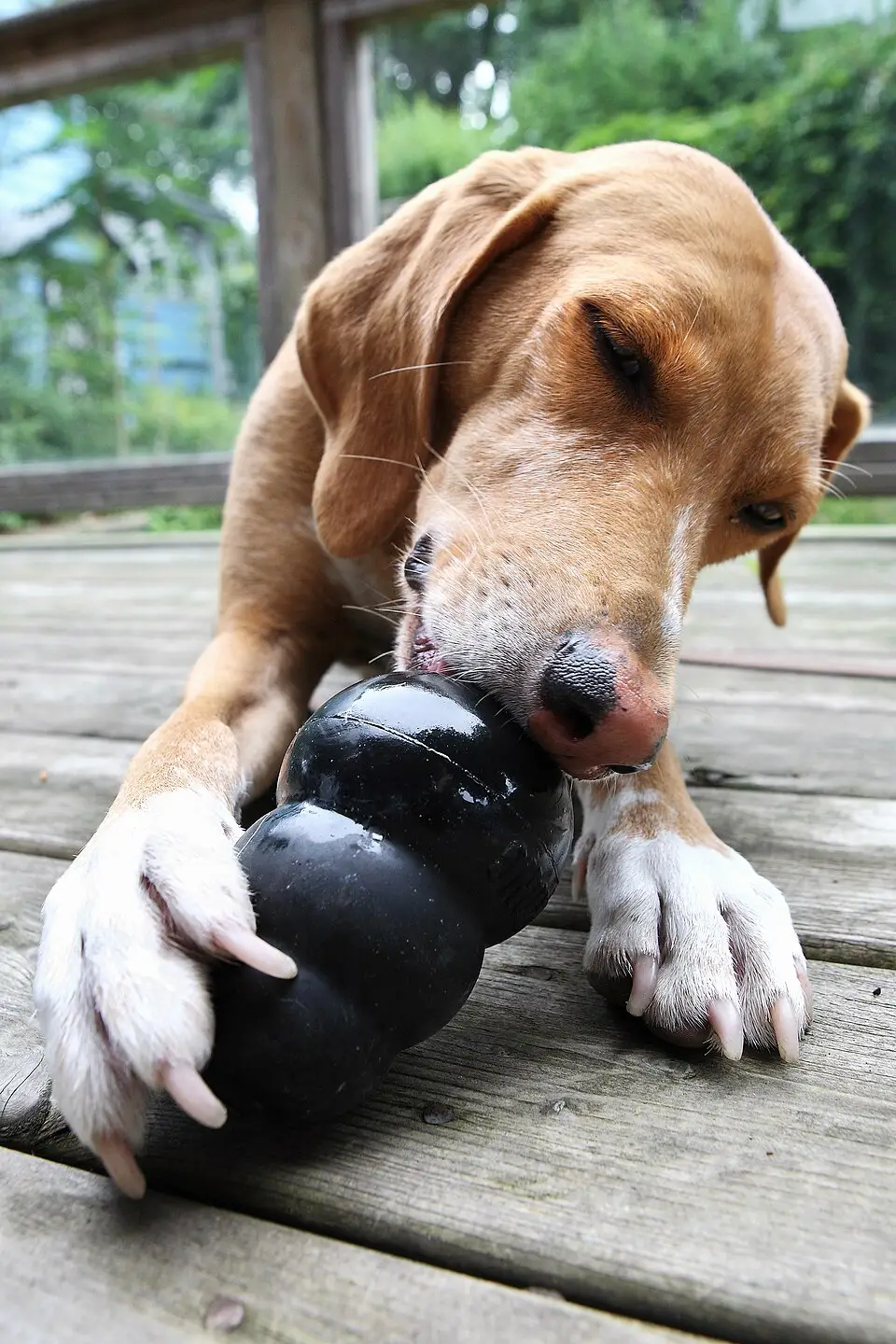
Offer chews that are made for the job. The ASPCA and VCA both suggest rotating chew toys every couple of days, so they stay interesting, and feeding part of your dog's daily food in puzzle toys at the times your dog usually chews.
On edible chews, experts disagree. Some vets accept bully sticks, pig ears or rawhide under supervision. The ASPCA adds that you should separate dogs while they chew and never give cooked bones. Others advise against them because of blockages and choking (VCA). Ask your vet which chews are right for your dog, and see our safe chews guide for the bend-and-dent test. The ASPCA also says to ask your vet about safe chews, since cooked bones splinter and intense chewers can break teeth. For young puppies, see our teething guide.
If you catch your dog chewing something off-limits, interrupt calmly, swap in an approved chew, then praise (ASPCA).
How much exercise and brain work does a chewer need?
Often more than owners expect. The ASPCA and VCA say daily walks, play, training and dog sports all help, and exercise your dog before leaving them alone. Working breeds benefit from jobs such as fetch, tug or agility. Our exercise guide gives general numbers.
Mental work counts too. Snuffle mats, puzzle feeders and short training games tire a dog out in a different way from a walk.
Do taste deterrents work?
They help alongside training. The ASPCA suggests letting your dog taste a little on a tissue first, spraying the items you want to protect, and reapplying daily for 2 to 4 weeks. Deterrents alone are not enough, so keep offering better chews at the same time.
How do you stop chewing when your dog is home alone?

First, work out whether your dog is anxious or bored. The ASPCA says separation anxiety chewing happens mostly when the dog is alone, often with whining, barking, pacing or accidents. If that sounds like your dog, read our separation anxiety guide and talk to your vet.
If boredom is the cause, exercise your dog before you leave, leave a puzzle toy or stuffed chew, and make sure anything tempting is out of reach. A pet camera shows you how your dog behaves while you are out.
What is a simple plan to start with this week?
Put the ASPCA and VCA advice together in this order:
- Watch and record. Keep a diary of when and where the chewing happens, and video your dog while you are out.
- Remove temptations. Move shoes, remote controls, kids' toys and laundry out of reach.
- Supervise or confine. When you cannot watch, use a crate or a dog-proofed room for no more than 6 hours.
- Offer approved chews. Rotate them every couple of days, and put part of the daily food in puzzle toys at the times your dog usually chews.
- Exercise first. Walk, play and train before you leave your dog alone.
- Redirect calmly. Interrupt chewing of off-limits items, swap in an approved chew, then praise.
- Protect favorite targets. Use a taste deterrent alongside training, and reapply it daily for 2 to 4 weeks.
Chewing often fades with age. The ASPCA says teething usually ends around 6 months, and VCA says excessive chewing seems to subside around 18 months, although some chewing continues throughout life. Keep the plan going until the habit has changed, because dogs learn from what works every day.
What not to do
Some common reactions make chewing worse. The ASPCA and VCA advise against these:
- Punishing your dog after the fact, since dogs cannot link it to the chewing and it may raise anxiety
- Taping the mouth shut
- Tying the chewed object to your dog
- Muzzling your dog to stop chewing
- Leaving your dog crated for more than 6 hours
When to call your vet or a behaviorist
If your dog swallowed pieces of something they chewed, call your vet right away. Also ask for help if your dog has compulsive fabric sucking, or shows aggression when you take items away. The ASPCA suggests a board-certified veterinary behaviorist (DACVB), a certified applied animal behaviorist (CAAB) or a certified professional dog trainer (CPDT) who has experience with these problems.
Step by step
- Find the causeKeep a diary of when, where and what happened before, and video your dog while you are out.
- Dog-proof and superviseMove tempting items away and keep your dog where you can see them, or confined safely when you cannot.
- Offer better chewsGive approved chew toys, rotate them, and use puzzle toys at chewing times.
- Add exercise and brain workWalk, play and train before you leave your dog alone.
- Redirect calmlyInterrupt chewing of off-limits items, swap in an approved chew, then praise.
Frequently asked questions
Why does my dog chew things only when I leave?
Possibly separation anxiety. The ASPCA says anxiety chewing happens mostly when the dog is alone, often with whining, barking, pacing or accidents. A video of your dog while you are out helps show the cause.
At what age do dogs stop chewing?
Teething usually ends around 6 months, according to the ASPCA. VCA says excessive chewing seems to subside around 18 months of age, but some chewing continues throughout life.
Do bitter sprays work?
They can help alongside training, but not on their own. The ASPCA suggests letting your dog taste a little on a tissue first, spraying the items and reapplying daily for 2 to 4 weeks while you teach better habits.
Should I punish my dog for chewing?
No, especially not after the fact. The ASPCA and VCA say dogs cannot link a later punishment to the chewing, and it may raise anxiety.
Why is my adult dog suddenly chewing?
Common causes are boredom, stress, hunger on a calorie-restricted diet and separation anxiety. A sudden change in behavior deserves a check with your vet.
Sources
More behavior guides
All guides
Behavior
How Much Do Dogs Sleep? Normal Hours by Age
Most adult dogs sleep 12 to 16 hours a day, and puppies and seniors sleep more. What is normal, what affects it, and th…

Behavior
How to Help a Dog Who Is Scared of Fireworks
Give your dog a quiet room, mask the noise and keep ID current. Then ask your vet about help and start gradual training…

Behavior
Separation Anxiety in Dogs: Signs and Training Plans
Separation anxiety is panic, not spite. Learn the signs, how to rule out other causes, a step-by-step alone-time plan,…


