Behavior · 6 min read
Why Does My Dog Eat Poop? Causes and How to Stop It
Quick answer
Dogs eat poop for many reasons, from normal puppy behavior to parasites, hunger or boredom. Most puppies outgrow it. To stop it, pick up stool right away, keep your dog leashed on walks, teach come and leave it, and see your vet to rule out medical causes. Most anti-poop products have not been shown to work.
In a hurry? See the gear we suggest ↓
Key takeaways
- Eating stool is common in puppies, which usually outgrow it, and mother dogs eat their puppies' stool for about the first 3 weeks.
- Two UC Davis surveys of about 1,500 owners each found 16% of dogs were frequent stool eaters and none of 11 commercial products worked.
- Medical causes to rule out include parasites, malabsorption, poor diets, and conditions that raise appetite such as diabetes.
- Pick up stool immediately, keep your dog leashed and supervised, and reward your dog for coming to you after they eliminate.
- Never rub your dog's nose in feces, which VCA calls outmoded and inhumane and which may encourage the behavior.
In this guide
- Is it normal for dogs to eat poop?
- What does the research show?
- What medical causes should you rule out?
- What behavioral reasons are there?
- How do you stop your dog from eating poop?
- What if your dog eats cat poop from the litter box?
- Do anti-poop-eating products work?
- What should you do when your dog has just eaten stool?
- When to call your vet
- FAQ
Eating poop, called coprophagia, is common in dogs, and it is rarely dangerous when the stool is their own. Puppies usually outgrow it. Stop it by cleaning up quickly, keeping your dog leashed, rewarding them for coming to you and checking with your vet for medical causes. Most anti-poop products have not been shown to work.
Is it normal for dogs to eat poop?
Yes, in many cases. The AKC says mother dogs lick their puppies to stimulate elimination and eat the feces for about the first 3 weeks. Puppies often copy the habit. VCA says it is common in puppies and usually outgrown by adulthood, and the AKC puts that at before about 9 months.
Eating their own stool is not dangerous, the AKC says, but other animals' stool may carry parasites, viruses or toxins. That is why a dog who eats poop on walks deserves more attention than one who samples their own.
What does the research show?
A UC Davis team led by Benjamin Hart ran two web surveys, each with about 1,500 usable returns (ISAZ 2018 abstract). It found that 16% of dogs were frequent stool eaters. They overwhelmingly chose fresh stool, and none of 11 commercial products was effective.
The AKC summarizes the study in more detail, so treat these figures as a secondary report:
| Finding | Result |
|---|---|
| Dogs seen eating stool at least once | 24% |
| Dogs that wanted stool only 1 to 2 days old | 92% |
| Dogs that ate other dogs' stool, not their own | 85% |
| Dogs that did it in one-dog homes vs three-dog homes | 20% vs 33% |
Greedy eaters were more likely to do it, and it was not linked to harder house training. These are survey results from owners, so they show patterns rather than causes.
What medical causes should you rule out?
Always check for a medical reason, especially if your dog is an adult who never did this before. VCA lists parasites, malabsorption or enzyme deficiency, underfeeding or poor diets, conditions that raise appetite (diabetes, Cushing's disease and thyroid disease) and drugs such as steroids. A stool test for parasites is the minimum workup (VCA).
Vitamin B deficiency has long been suspected, and the AKC cites older studies, but there is no proven supplement fix. Ask your vet before giving vitamins. Our pages on diabetes, diarrhea and vomiting cover signs that go with some of these causes. If you are unsure how much to feed, see our feeding guide.
What behavioral reasons are there?
Behavior and environment also play a part. The AKC and VCA list isolation, confinement in small spaces, harsh house-training punishment, attention-seeking and feeding near the potty area.
Never rub a dog's nose in feces. The AKC says it may encourage the behavior, and VCA calls the practice outmoded and inhumane. If your puppy is still learning where to go, our potty training guide can help you set up a routine.
How do you stop your dog from eating poop?
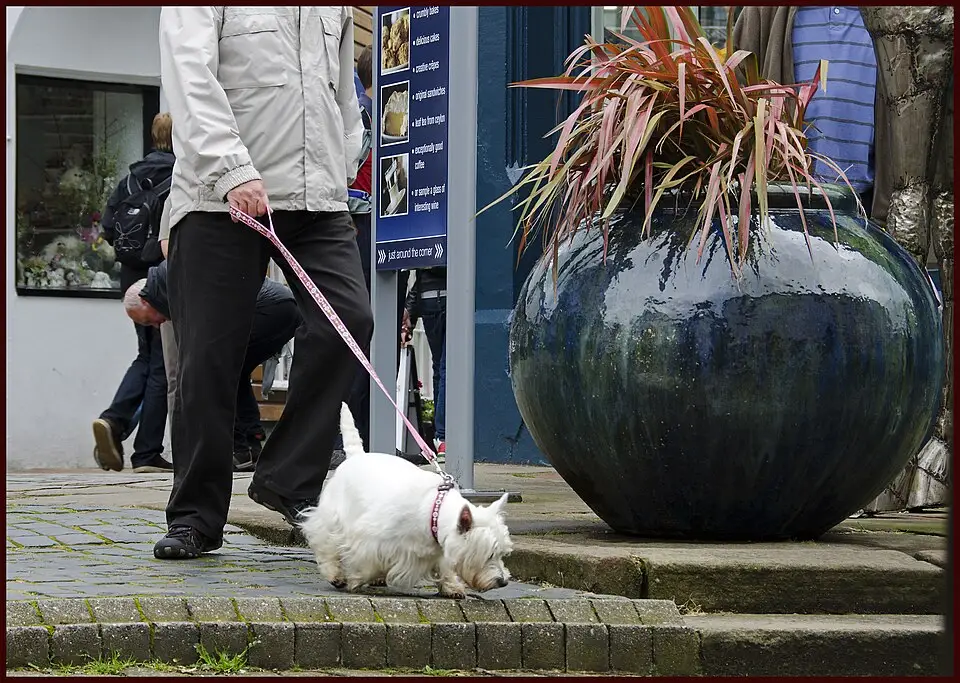
There is no magic fix, but steady habits work. The AKC and VCA recommend these steps:
- Pick up stool immediately, in the yard and on walks.
- Keep your dog leashed and supervised outside.
- Call your dog to you for a treat right after they eliminate.
- Train come and leave it, so you can interrupt when needed.
- Keep feeding areas away from potty areas.
- Do not overreact when it happens.
Keep treats in a pouch on walks so you always have a reward ready. Practice leave it at home first, then in easier places outside.
What if your dog eats cat poop from the litter box?
Keep the litter box clean or out of your dog's reach. The AKC suggests a self-cleaning box or a gate. Because other animals' stool may carry parasites, viruses or toxins (AKC), keeping the box out of reach protects your dog as well as stopping the habit.
Do anti-poop-eating products work?
Usually not. VCA says taste deterrents tend to fail because dogs build tolerance or simply avoid the treated stool. The AKC says all animals in the home must eat a deterrent product for it to work. And the UC Davis study found none of 11 products effective.
Supplements with digestive enzymes helped some owners, according to the AKC, but there is no trial evidence, so ask your vet before trying any. Do not use aversive tools such as remote spray collars. The American Veterinary Society of Animal Behavior recommends reward-based training only.
What should you do when your dog has just eaten stool?
Stay calm. The AKC says eating their own stool is not dangerous, so it is usually not an emergency, and the advice is not to overreact. Do not scold your dog or rub their nose in it, because the AKC says that may encourage the behavior.
Think about whose stool it was. Other animals' stool may carry parasites, viruses or toxins (AKC), so call your vet if your dog ate another animal's stool and seems unwell.
Then change the setup. Pick up stool right away, keep your dog leashed outside, and call your dog to you for a treat after they eliminate. For an adult dog that suddenly starts, the vet is the next stop, because VCA lists parasites, malabsorption, underfeeding or poor diets, conditions that raise appetite and some drugs as medical causes. A stool test for parasites is the minimum workup (VCA), so bring a fresh sample if you can.
When to call your vet
See your vet if your dog is losing weight, seems hungrier than usual, or has diarrhea or vomiting. Also call if a dog who never did this suddenly starts. Ask your vet about deworming, and bring a fresh stool sample if you can. Some causes are simple to treat once found.
Frequently asked questions
Is it harmful if my dog eats poop?
Eating their own stool is not dangerous, according to the AKC, but other animals' stool may carry parasites, viruses or toxins. Call your vet if your dog ate another animal's stool and seems unwell.
Will my puppy grow out of eating poop?
Usually. VCA says it is common in puppies and usually outgrown by adulthood, and the AKC says before about 9 months. Pick up stool quickly in the meantime so there is nothing to practice on.
Do pineapple or stool-eating chews work?
There is little evidence that they do. A UC Davis study found none of 11 commercial products effective, and VCA says taste deterrents usually fail. Ask your vet before trying any product or supplement.
Why does my dog eat poop on walks?
Scavenging, and a preference for fresh stool. The UC Davis survey found most dogs wanted stool only 1 to 2 days old. Keep your dog leashed, and train come and leave it.
Can a vitamin deficiency cause it?
Vitamin B deficiency has long been suspected, and the AKC cites older studies, but there is no proven supplement fix. Ask your vet before giving vitamins.
Sources
More behavior guides
All guides
Behavior
How Much Do Dogs Sleep? Normal Hours by Age
Most adult dogs sleep 12 to 16 hours a day, and puppies and seniors sleep more. What is normal, what affects it, and th…
Behavior
How to Help a Dog Who Is Scared of Fireworks
Give your dog a quiet room, mask the noise and keep ID current. Then ask your vet about help and start gradual training…
Behavior
How to Stop a Dog From Chewing Everything
Find out why your dog chews, then dog-proof, supervise, offer better chews and add exercise. What works for chewing whe…